
Magnacore Micropile Self-Drilling Anchors & Hollow Bar Systems
Loose soils, collapsing boreholes, buried obstructions, and restricted access can turn a conventional micropile installation into a sequence of extra drilling, casing, and grouting steps. Intech Anchoring Systems supplies Magnacore micropile self-drilling anchors & hollow bar systems that combine drilling, grouting, and permanent steel reinforcement into one continuous installation process.
Magnacore gives deep foundation and geotechnical contractors a system that can be configured around project loads, ground conditions, access, and installation requirements. We support the product with engineering guidance, stocked bar sizes and accessories, equipment rental and sales, and training for crews adding self-drilling anchor capability.
Call Intech Anchoring Systems at (888) 458-8904 or contact our team to discuss Magnacore bar sizing, ground conditions, equipment, and project requirements.
One Hollow Bar Performs Three Jobs During Installation
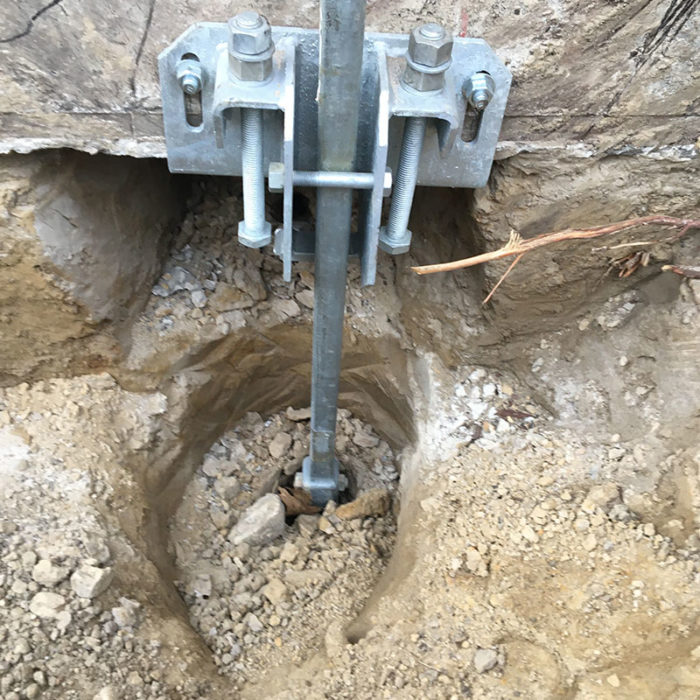
The defining feature of the Magnacore system is the hollow, continuously threaded steel bar. During installation, the bar serves as the drill string while cement grout is pumped through its center and discharged through ports in the sacrificial drill bit. Once the required depth is reached, the same bar remains in the ground as permanent steel reinforcement.
That means drilling, flushing, grouting, and reinforcement occur during the same advance rather than as separate operations. In ground where an open borehole is difficult to maintain, this sequence can reduce the need for temporary casing and simplify the amount of equipment and material that has to be staged at the work area.
How Magnacore Self-Drilling Anchors Are Installed
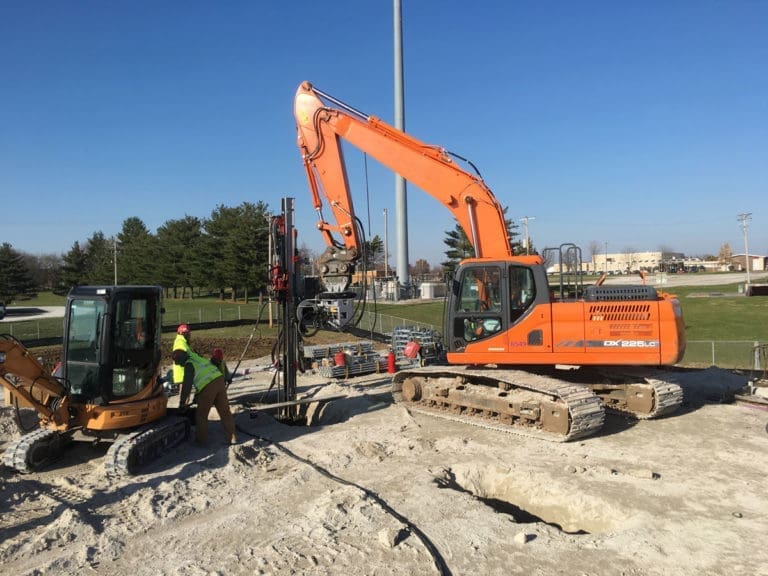
Installation begins with a sacrificial drill bit selected for the expected soil or rock conditions and threaded onto the first hollow bar section. Rotary-percussion drilling advances the assembly while a grout plant pumps neat cement grout through the center of the bar and out through the bit, helping flush cuttings and fill the annulus surrounding the reinforcement.
Additional bar sections are connected with couplers as depth increases. Because the bar is continuously threaded, sections can be joined as installation progresses, allowing contractors to build the anchor or micropile to the depth required by the design and encountered ground profile.
Magnacore Bar Sizes and System Components
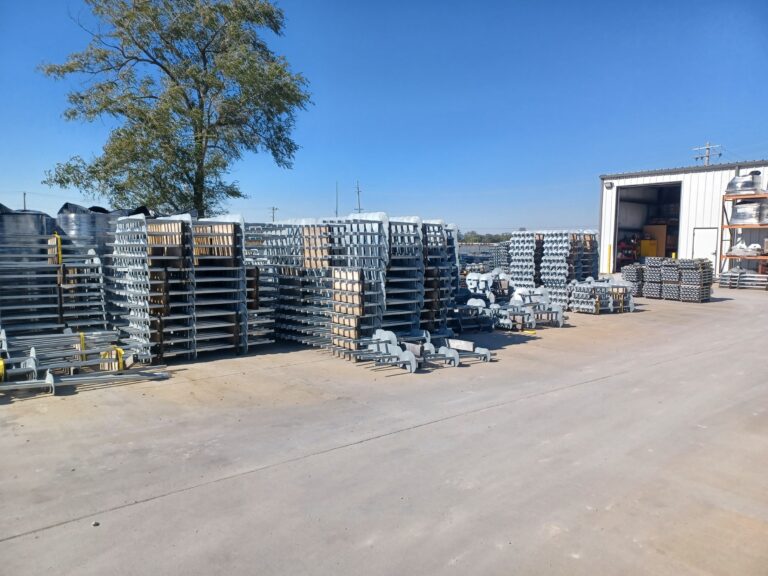
Magnacore includes multiple hollow bar sizes so contractors and engineers can match the reinforcement to required loads and project geometry. Standard bar families include R32, R38, R51, T40, T52, and T76, with standard stock lengths of 4.92 feet and 9.84 feet.
A complete self-drilling anchor assembly can include the components below, and custom bar lengths, sizes, and bit configurations can be sourced when standard components do not fit the project requirements:
- Hollow anchor bars: Continuously threaded steel sections serve as both the drill string and permanent reinforcement.
- Sacrificial drill bits: Soil-specific bits advance through the formation and remain in place after installation.
- Couplers: Join bar sections as the anchor or micropile advances to greater depth.
- Nuts & bearing components: Complete the connection required by the specific application.
- Grout: Neat cement grout travels through the bar during drilling, forms the surrounding grout body, and encases the bar along its length for corrosion protection.
- Corrosion-protection options: Standard bars are supplied non-galvanized, with galvanized material available for projects requiring additional protection.
Read Our Magnacore Product Catalog
Match the Drill Bit to the Ground
The hollow bar may stay consistent through an installation, but the bit at the end of the system has to match what the crew expects to drill through. Magnacore uses interchangeable sacrificial bits selected around conditions such as clay, sand, gravel, soft rock, hard rock, and mixed formations.
That flexibility becomes particularly useful on projects with variable ground where a conventional open-hole method would be difficult to maintain. Bit selection, bar size, grout behavior, drilling equipment, and the subsurface profile should be considered together rather than treating the bit as a disposable accessory chosen independently of the system.
Where Magnacore Self-Drilling Systems Are Used
The same hollow bar technology can serve several geotechnical applications because the installed element can be configured around compression, tension, earth retention, and ground reinforcement requirements, though system configuration should still follow the engineered requirements of each application rather than assuming the same bar and installation parameters apply across every use:
- Hollow bar micropiles: Create deep foundation elements for new construction, towers, bridges, and other high-capacity support applications.
- Foundation underpinning: Transfer loads deeper when existing foundation support needs reinforcement.
- Tieback anchors: Develop tension resistance behind retaining walls, shoring systems, and excavations.
- Soil nails: Reinforce slopes, cuts, and retaining systems where ground stabilization is required.
- Shoring & excavations: Support temporary or permanent earth-retention systems.
- Slope & embankment stabilization: Reinforce unstable soil or rock where movement must be controlled.
- Limited-access foundations: Install deep support in areas where headroom, footprint, or equipment access limits conventional methods.
Hollow Bar vs. Conventional Solid Bar Micropiles
Conventional solid bar micropiles generally follow a sequential process: drill the hole, maintain the bore with casing when required, install the reinforcement, and place grout. That method can work well where the borehole remains stable and the project has room for the equipment and material required by each step.
Magnacore combines drilling and grouting while the hollow bar advances, leaving the reinforcement behind at the end of the same operation. The difference can become significant in loose or collapsible soils, limited-access work zones, and projects where reducing casing, staging, and separate installation steps improves production.
Equipment Needed to Install Magnacore
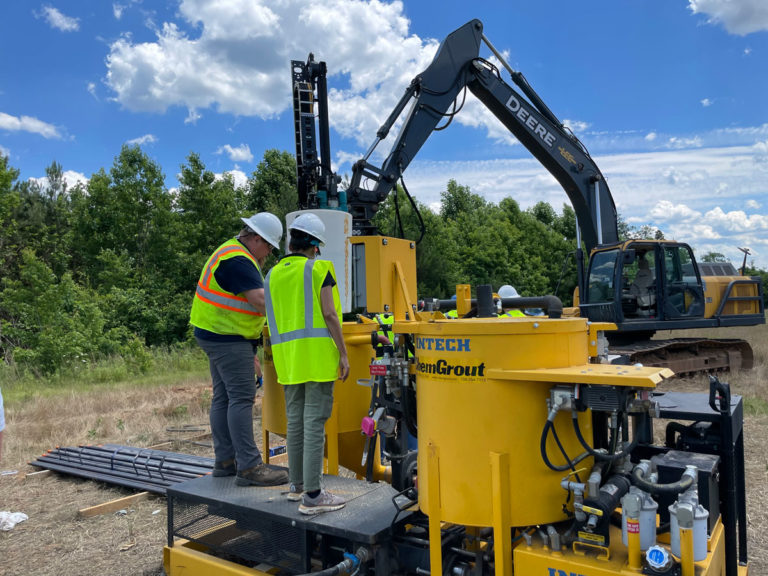
A typical self-drilling anchor installation uses a drill capable of rotary-percussion operation and a grout plant capable of supplying cement grout continuously during advancement. Couplers, bits, tooling, grout swivels, and other system accessories complete the installation setup.
Intech offers rock drills and feed systems along with grout plants for rent or purchase. Contractors can build permanent self-drilling capacity into their fleet or source equipment around an individual project without buying an entire setup before the first installation.
Magnacore FAQs
When does Magnacore make more sense than a conventional micropile?
Magnacore is particularly useful when unstable ground makes maintaining an open borehole difficult, when access limits the amount of equipment that can be staged, or when combining drilling and grouting can simplify the installation sequence. The final choice should still account for loads, geology, equipment access, and project specifications.
What Magnacore bar sizes are available?
The product line includes R32, R38, R51, T40, T52, and T76 hollow bars. Required structural capacity, drilling conditions, anchor geometry, and the project design determine which bar belongs in the system.
Are Magnacore bars available galvanized?
Standard stocked material is non-galvanized. Hot-dip galvanized bars and other custom configurations can be ordered when the project requires additional corrosion protection.
Can Magnacore be used for both micropiles and tiebacks?
Yes. The hollow bar system can be configured for micropiles, tieback anchors, soil nails, underpinning, and other ground-reinforcement applications. Each application requires its own design, bar selection, connection details, and installation criteria.
Can Intech help contractors new to hollow bar installation?
Yes. We provide product selection assistance, engineering support, installation guidance, equipment options, and training, including our Hollow Bar Micropile School, for contractors building self-drilling anchor capability.
Engineering Support Before Material Reaches the Jobsite
Selecting a hollow bar system requires more than choosing a diameter from a catalog. Loads, soil and rock conditions, installation angle, corrosion requirements, required bond length, access, bit selection, grout setup, and available drilling equipment can all affect the final configuration.
Since 1998, Intech Anchoring Systems has worked with contractors, estimators, engineers, and project teams to match Magnacore components to those conditions. Stocked inventory helps reduce lead times, and equipment availability gives project teams a single source for the bar system, installation hardware, drilling equipment, and grouting setup.
Training Contractors to Install the System Correctly
A more efficient installation sequence only creates value when the crew understands drilling technique, grout delivery, bar handling, coupler installation, tooling, and equipment setup. Intech supports Magnacore contractors with hands-on training and technical guidance rather than limiting support to product shipment.
Our Hollow Bar Micropile School and certified installer program give contractors an opportunity to learn the system and installation process before applying it on more demanding foundation and earth-retention work.
Put Magnacore to Work on the Ground You Actually Have
Intech Anchoring Systems helps contractors build the Magnacore system around the required loads, encountered geology, available access, and the equipment needed to install it. From bar and bit selection through drilling equipment, grout plants, training, and engineering input, the goal is to give the project team a complete installation path rather than a shipment of hollow steel.
Call Intech Anchoring Systems at (888) 458-8904 or contact us online to discuss Magnacore self-drilling anchors for your next micropile or earth-retention project.