
Micropile Foundation Systems: Hollow Bar & Self-Drilling Anchors
Difficult ground, restricted access, high structural loads, and unpredictable subsurface conditions can make conventional deep foundation methods impractical before installation even begins. Micropile foundation systems give contractors and engineers another way to transfer structural loads into competent soil or rock using small-diameter, high-capacity elements that can be installed across a wide range of site conditions.
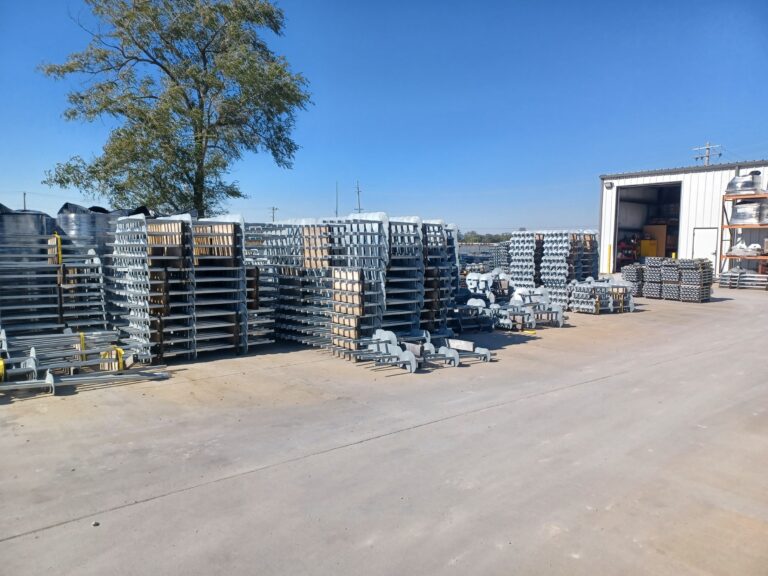
Intech Anchoring Systems supplies hollow bar micropiles, self-drilling anchors, installation equipment, and technical support for deep foundation projects throughout the United States. Our Magnacore system combines drilling, grouting, and steel reinforcement into a continuous installation process that can reduce equipment requirements and simplify work in unstable soils or confined spaces.
Call Intech Anchoring Systems at (888) 458-8904 to discuss soil conditions, load requirements, access constraints, and the micropile system that fits your project.

What Is a Micropile Foundation System?
A micropile is a small-diameter deep foundation element, generally less than 300 mm in diameter, that transfers structural loads through steel reinforcement, cement grout, and the bond developed between the grout and surrounding soil or rock.
Micropiles can carry compression and tension loads and can be incorporated into new foundations, foundation rehabilitation, tieback systems, soil stabilization work, and other applications where larger deep foundation equipment may not be practical.
The installation method matters. Traditional solid bar systems require crews to drill a borehole, maintain the hole with casing when ground conditions demand it, place the steel reinforcement, and grout the pile in separate stages. Hollow bar systems combine those operations by using the steel bar itself as the drill string while grout is injected through its center during advancement.
Why Hollow Bar Micropiles Change the Installation Sequence
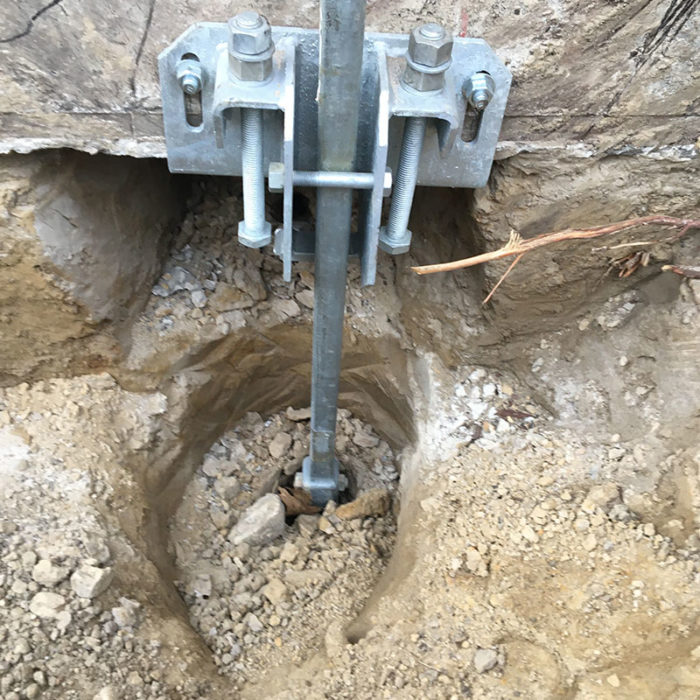
A hollow bar micropile, also called a self-drilling anchor or SDA, performs several jobs at once. The hollow steel bar acts as the drilling member during installation, provides a path for grout, and remains in place as the permanent steel reinforcement.
Fine cement grout is pumped continuously through the bar as drilling progresses. That grout fills the annulus around the steel and can penetrate surrounding soils while supporting the borehole as the pile advances. In sandy soils, the pressurized grout is pushed into the surrounding ground as the bar advances, which can increase the load capacity of the finished pile.
This installation method offers several practical advantages:
- No separate pre-drilling step: Drilling and grouting take place during the same operation.
- Reduced casing requirements: Continuous grouting helps support unstable ground, so temporary casing is not required on most installations.
- High load capacity: Steel reinforcement and grout-to-ground bond work together to transfer structural loads.
- Broad soil compatibility: Sacrificial drill bits can be selected for sand, clay, soft rock, hard rock, and variable ground profiles.
- Limited-access installation: Compact drilling equipment can operate where conventional deep foundation rigs may not fit.
- Lower equipment footprint: Hollow bar installations typically require a rock drill and grout plant rather than a larger collection of drilling, casing, reinforcement, and grouting equipment.
- Reduced vibration: Installation can limit disturbance around adjacent structures compared with larger conventional foundation equipment.
Magnacore Self-Drilling Anchors for Micropile Foundations
Intech Anchoring Systems supplies Magnacore self-drilling anchors for hollow bar micropile applications where contractors need an adaptable system for unstable soils, variable geology, limited access, or demanding structural loads.
The sacrificial drill bit at the end of the hollow bar is selected around the formation being drilled. As the assembly advances, grout travels through the center of the bar and exits near the drill bit, filling the bore and surrounding the permanent steel reinforcement.
That combination allows the installation process to adapt as conditions change rather than depending on an open borehole remaining stable long enough for reinforcement and grout to be installed afterward.
Hollow Bar vs. Solid Bar Micropiles
Both systems can serve deep foundation applications, but the installation sequence and site requirements are different.
Solid bar micropiles typically require pre-drilling followed by placement of the reinforcement and a separate grouting operation. Loose or collapsible ground may require temporary steel casing to keep the borehole open during those stages.
Hollow bar micropiles drill and grout simultaneously. The bar becomes the permanent reinforcement, and continuous grout placement helps support the hole during advancement. On most projects, casing is unnecessary unless the design calls for additional lateral capacity.
For predictable ground with stable boreholes and readily accessible drilling areas, solid bar systems may remain appropriate. Hollow bar systems become particularly attractive when soil instability, obstructions, equipment mobilization, low headroom, or restricted access complicate the conventional sequence.
Micropiles vs. Drilled Pier Foundations
Micropiles transfer loads differently from larger drilled piers. The central steel reinforcement contributes significantly to pile capacity, while skin friction develops through the grout bond with surrounding soil or rock. That makes micropiles useful for compression, tension, and combined loading conditions. When lateral capacity is required, engineers can incorporate steel casing into the design where appropriate.
Micropiles can also simplify work where drilled piers encounter voids or formations requiring additional rock coring. Hollow bar installation advances through the formation while grout fills irregularities around the pile, creating continuous contact between the installed element and surrounding material.
Where Micropile Systems Are Used
Micropiles are used anywhere project loads, subsurface conditions, or access restrictions make conventional foundation methods difficult.
Common applications include:
- New building foundations: Support commercial, industrial, and other structures where shallow foundations cannot carry required loads.
- Vertical compression elements: Transfer downward structural loads into competent soil or rock.
- Vertical tension elements: Resist uplift generated by wind, water, seismic activity, structural loading, or other design conditions.
- Foundation rehabilitation: Reinforce or supplement existing foundations without requiring complete replacement.
- Bridge foundations: Support new bridge construction and rehabilitation where high capacity is required.
- Tower foundations: Provide deep foundation support for transmission, communications, and similar structures.
- Tiebacks: Provide anchorage for retaining structures and other systems requiring lateral restraint.
- Soil nails: Reinforce slopes, cuts, and excavations where ground stabilization is required.
- Adjacent-structure stabilization: Allow foundation work near existing buildings where access and vibration need to be controlled.
- Limited-access foundations: Bring deep foundation capacity into basements, interior spaces, low-headroom areas, and tight urban sites.
Micropile Deep Foundation Projects
A deep foundation becomes necessary on sites with high loads, on-site obstructions, or soil that cannot support conventional foundations. A micropile deep foundation typically uses groups of micropiles working together to meet the load requirements of the structure, with the layout and design tailored to the site conditions.
Micropiles for Existing Foundation Rehabilitation
Foundation rehabilitation frequently creates an access problem before it creates an installation problem. Crews may need to work inside an occupied or existing structure, beneath limited overhead clearance, or alongside structural elements that prevent a conventional drilling rig from reaching the work area.
Micropile equipment can be configured for these restricted environments. The smaller installation footprint allows contractors to add deep foundation capacity without relying on the same access required for larger drilled shafts or conventional foundation equipment. For hollow bar systems, eliminating separate casing and reinforcement operations can further reduce the amount of material and equipment that must be staged inside the work zone. For foundation repair, micropiles are often a cost-effective alternative to full foundation replacement, particularly where access limits the other options.
Micropile Foundation Stabilization of Adjacent Structures
Micropile equipment is smaller and less intrusive than conventional deep foundation equipment, which suits structures that share adjacent walls and sites where neighboring buildings limit access. The smaller footprint also reduces vibration and disruption to nearby properties, which matters in dense urban areas and next to sensitive structures.
Rock Drills and Grout Plants for Hollow Bar Installation
The anchoring system is only one part of the operation. Contractors also need drilling and grouting equipment capable of installing the system correctly.
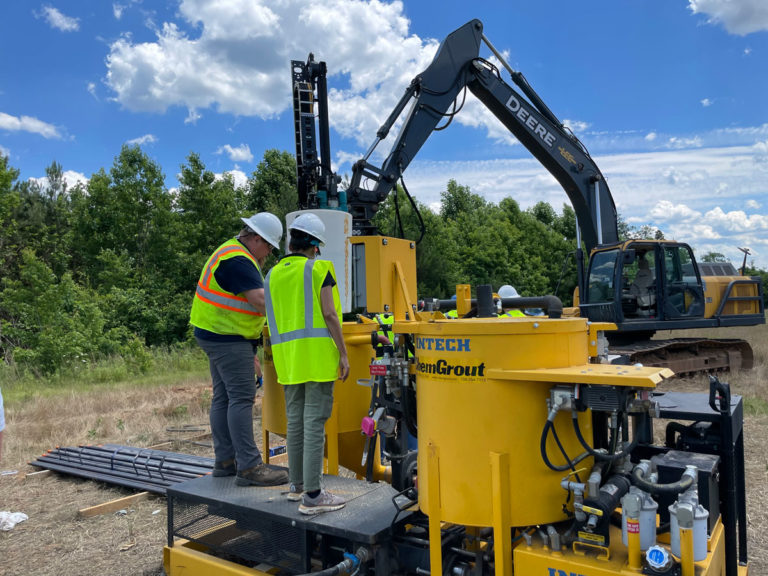
Intech supplies rock drills and grout plants for hollow bar micropile installation. Rock drills provide the rotary-percussion drilling needed to advance the bar, while high-shear grout plants mix and pump cement grout through the hollow reinforcement during installation.
Equipment is available for rental or purchase, giving contractors a way to add hollow bar installation capability without necessarily purchasing a complete new equipment package for the first project.
Frequently Asked Questions About Micropile Foundation Systems
What soil conditions can hollow bar micropiles handle?
Hollow bar systems can be installed across a broad range of soils and rock formations, including loose sand, clay, unstable ground, soft rock, and hard rock. Sacrificial drill bits are selected around the formation expected on the project.
Do hollow bar micropiles require casing?
Not on most installations. Continuous grout placement supports the hole as drilling progresses, which eliminates the need for temporary casing in many ground conditions. Casing may still be incorporated when the engineering design requires additional lateral capacity.
Can micropiles carry both compression and tension loads?
Yes. Micropiles can be designed for compression, tension, or combined loading. Capacity develops through the steel reinforcement and the bond between the grout and surrounding soil or rock.
Can micropiles be installed inside an existing building?
Yes. Their relatively small equipment footprint makes micropiles useful for basements, interior foundation rehabilitation, low-headroom areas, and other locations where conventional drilling equipment cannot operate efficiently.
What equipment is needed to install hollow bar micropiles?
A typical hollow bar installation uses a rock drill and grout plant. This is one of the practical differences from solid bar installation, which can require separate drilling equipment, casing, reinforcement, and grouting operations.
How deep can micropiles be installed?
Installation depth depends on project requirements and ground conditions. Micropiles can extend from a few feet to well over 100 feet, with the bar, bit, and grout system selected around the depth and formation involved.
Are micropiles more cost effective than drilled piers?
In many cases, yes, particularly when drilled piers would require extensive rock coring or additional measures to address voids. The comparison depends on the site, loads, and access, so it is worth evaluating both against the actual project conditions.
Engineering Support, Equipment Rentals & Sales for Micropile Projects
Micropile selection is not simply a choice between two steel bars. Soil conditions, rock depth, structural loading, lateral requirements, available headroom, equipment access, drilling method, and project schedule all influence the system that makes sense.
Intech Anchoring Systems works with contractors and engineers to evaluate those conditions and develop an installation approach around the project. Our team supports Magnacore hollow bar micropiles along with conventional anchoring products, engineering guidance, installation training, and the drilling and grouting equipment required to put the system in the ground.
That combination allows contractors to source the anchoring system, technical support, and installation equipment through one partner rather than coordinating each part of the operation separately.
Build the Micropile System Around the Ground Conditions
Micropiles are valuable because they can solve foundation problems that become difficult for larger or more rigid installation methods. Their small diameter, high load capacity, adaptable drilling setup, and ability to operate in unstable ground or confined spaces make them a practical deep foundation option for new construction, rehabilitation, and stabilization projects.
The right configuration still depends on what is beneath the site and what the structure needs above it. Start with the loads, geology, access, and installation constraints, then select the bar, bit, grout system, and equipment around those conditions.
Call Intech Anchoring Systems at (888) 458-8904 to discuss your micropile foundation project with our engineering team.