
Foundation Underpinning With Helical Piles: Stabilize & Lift
Dependable Solution for Foundation Lifting & Stabilization
Foundation settlement requires more than supporting the structure where it sits today. The underpinning system needs to transfer structural loads beyond weak or unstable near-surface soils and into competent bearing material. Intech Anchoring Systems supplies foundation underpinning products, installation equipment, and technical support for contractors and engineers addressing settlement in residential, commercial, and structural repair applications.
Our helical pile underpinning systems provide a controlled method for foundation stabilization and, where project conditions allow, foundation lifting. With limited excavation, measurable installation torque, immediate load transfer, and equipment suited for restricted-access work, helical piles can help contractors stabilize existing foundations without the excavation and curing requirements associated with many conventional underpinning methods.
Planning an underpinning job? Call Intech Anchoring Systems at (888) 458-8904 or contact our team to review piles, brackets, and equipment.
What Is Foundation Underpinning?
Foundation underpinning strengthens an existing foundation by extending structural support to deeper soil or bearing strata capable of carrying the required load. It is commonly used when shallow supporting soils can no longer provide reliable bearing because of settlement, poor compaction, erosion, changing moisture conditions, increased structural loads, or other geotechnical conditions.
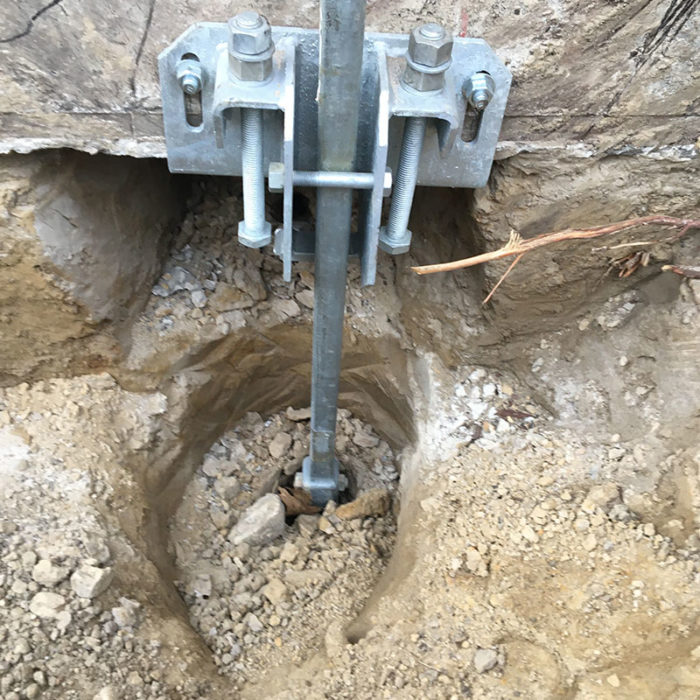
Underpinning systems connect the existing foundation to deep foundation elements installed below the problem soils. Depending on the project, contractors may use helical piers or resistance piers to stabilize the structure, transfer loads, and potentially recover elevation when the structure and site conditions permit controlled lifting.
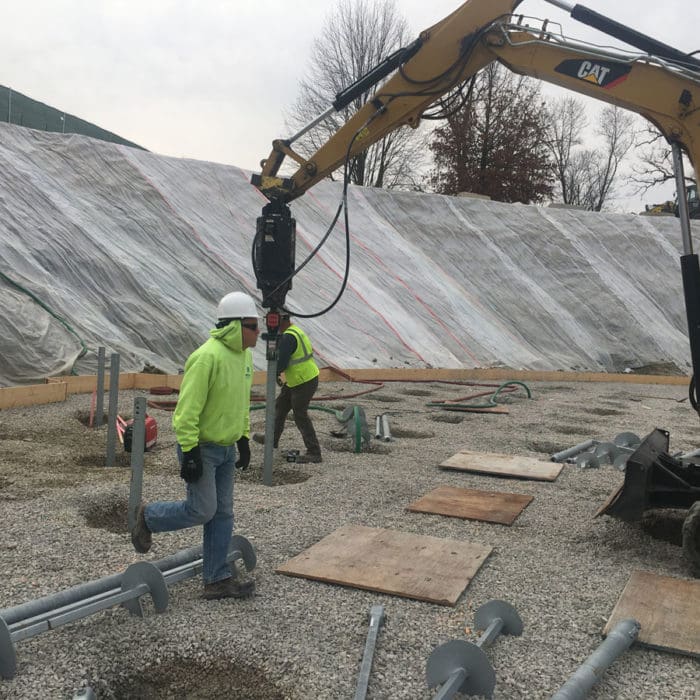
Helical Piers
Helical piers are advanced into the ground using hydraulic rotary equipment. Helical bearing plates develop capacity within suitable soil layers, while installation torque provides useful field data that can be correlated with pile capacity as part of the project design and installation criteria.
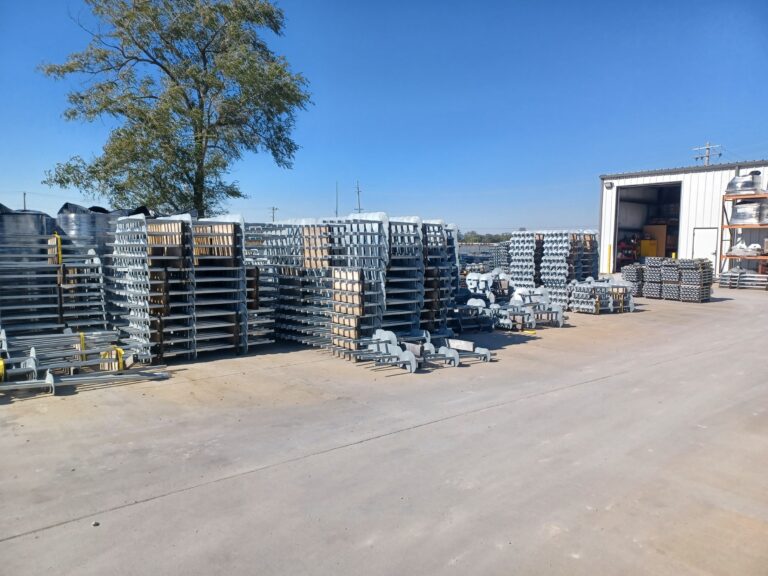
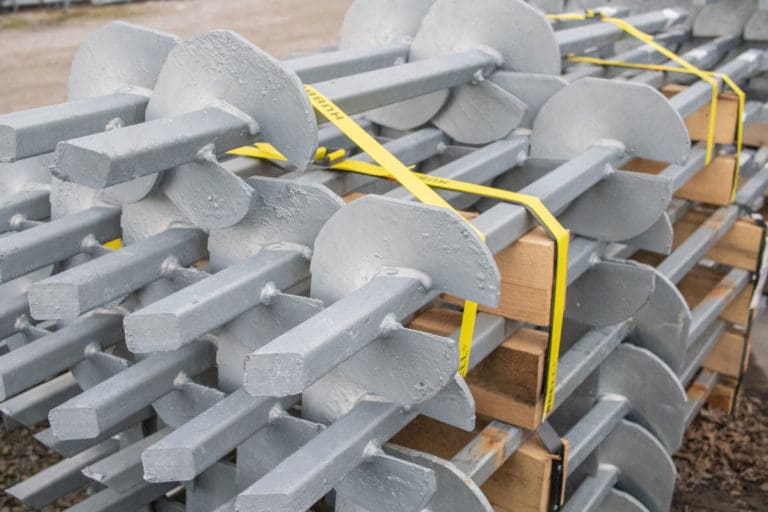
Intech supplies round- and square-shaft helical underpinning systems manufactured from high-strength steel, with galvanized or epoxy-coated finishes for long-term corrosion protection. Available configurations can support a range of foundation repair requirements, with helical underpinning anchors rated up to 100,000 pounds each depending on the selected system, configuration, soil conditions, and engineering requirements.
Resistance Piers
Resistance piers, also called push piers or jacked piers, provide another method for transferring foundation loads through unstable soils. Rather than being rotated into the soil, resistance pier sections are hydraulically advanced using the structure as reaction until the required installation criteria are reached.
They are commonly specified for existing foundation settlement where sufficient structural weight is available to provide installation reaction. Project conditions, structural loads, subsurface conditions, access, and engineering requirements help determine when resistance piers or helical piles are the better underpinning system.
Benefits of Helical Pile Underpinning
Helical pile underpinning gives contractors and design professionals a deep foundation option that combines controlled installation with measurable field information and limited disturbance around an existing structure.
- Immediate load transfer: Helical piles do not rely on concrete curing, allowing brackets and structural loads to be transferred after installation requirements are satisfied.
- Limited excavation: Installation generally requires localized access to the footing rather than large-scale excavation along the foundation.
- Installation torque verification: Recorded installation torque gives contractors and engineers measurable information that can be used to verify specified installation criteria and correlate with pile capacity.
- Low vibration installation: Rotary installation produces minimal vibration compared with driven foundation systems, an advantage around occupied structures and sensitive adjacent improvements.
- Restricted-access capability: Compact hydraulic installation equipment can make helical underpinning practical where large foundation equipment cannot operate.
- Flexible pile configurations: Shaft types, helix configurations, extensions, and brackets can be selected around structural loads and subsurface requirements.
- Foundation stabilization and lifting: Systems can be configured for load transfer and stabilization, with controlled lift possible on qualifying structures when specified by the project team.
- Year-round installation: Helical piles can be installed across a wide range of site and weather conditions when soil and access conditions permit.
For contractors, the primary advantage is control. Installation criteria, torque readings, pile depth, bracket connections, and load transfer can all be documented as the underpinning system is installed.
The Foundation Underpinning Installation Process
A successful underpinning project starts with understanding the structure, the settlement mechanism, the required loads, and the subsurface conditions. The engineer or project team determines pile locations, design loads, installation criteria, bracket requirements, and whether the objective is stabilization only or stabilization with an attempted lift.
Installation typically follows these steps:
- Foundation exposure: Small excavations are completed at specified pier locations to expose the footing or foundation element where the underpinning bracket will be installed.
- Helical pile installation: Hydraulic rotary equipment advances each pile into the ground while the installation team monitors torque, depth, and other specified termination criteria.
- Extensions and verification: Additional pile extensions are installed as required until the specified bearing zone and installation criteria are achieved.
- Bracket installation: An underpinning bracket is positioned and connected so the structural load can be transferred from the existing foundation to the installed pile.
- Load transfer or controlled lift: The structure is transferred onto the underpinning system. Where engineering and structural conditions allow, hydraulic equipment can be used to recover some lost elevation.
- Documentation: Final installation torque, pile depth, elevations, pile locations, and other required field data are recorded for the project file.
This controlled process gives contractors and engineers measurable installation information while reducing the amount of excavation required around the existing foundation.
Engineering Support and Project Assistance
Underpinning performance depends on more than ordering a pile and installing it beside a footing. Contractors need the correct pile configuration, bracket, installation tooling, drive equipment, torque monitoring equipment, and project quantities before crews mobilize.
Intech Anchoring Systems supports foundation underpinning projects with:
- Helical piles and extensions: Multiple shaft and helix configurations for project-specific load and soil requirements.
- Foundation underpinning brackets: Components designed to connect the installed deep foundation element to the existing footing.
- Resistance pier systems: Push pier components for qualifying settlement repair applications.
- Torque monitoring equipment: Tools for tracking installation torque against specified field criteria.
- Technical and engineering support: Assistance with system selection, loads, pile configuration, and project planning.
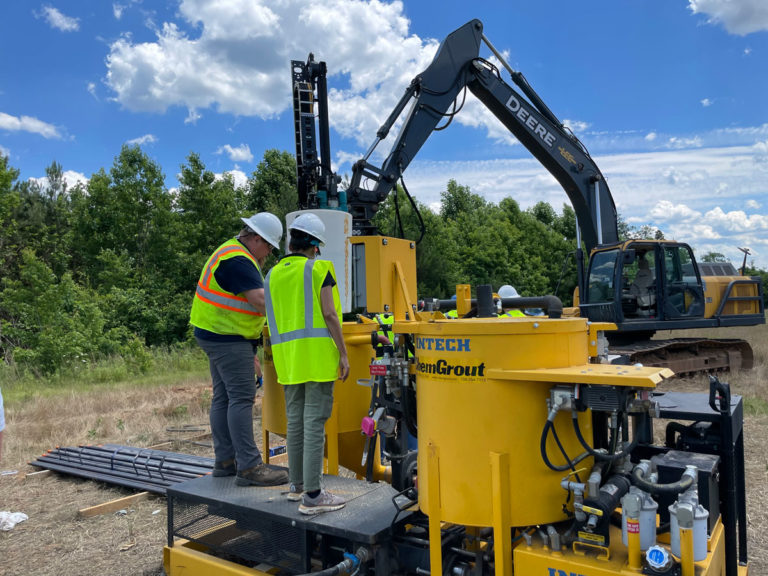
- Equipment rental or purchase: Hydraulic installation equipment and related tools available around contractor requirements.
- Project budgeting: Product quantities and equipment needs can be evaluated early to support more accurate estimating and cost planning.
- Installer training: Training resources help contractors understand equipment operation, product installation, and system requirements.
- Project-specific support: Our team can help contractors coordinate materials, equipment, and technical resources before work begins.
With an extensive product inventory and equipment available for rental or purchase, Intech helps contractors coordinate the foundation system and the equipment required to install it rather than sourcing each component independently.
Need help building an underpinning package? Partner with Intech or call (888) 458-8904 to review project loads, quantities, equipment, and installation needs.
Applications for Foundation Underpinning in Commercial and Residential Projects
Helical pile underpinning can be specified anywhere an existing foundation needs to transfer load beyond inadequate near-surface soils. The system is used for both structural repair and projects that place new demands on an existing foundation.
Common applications include:
- Settled foundations: Stabilize foundations that have moved because supporting soils can no longer carry the structural load reliably.
- Differential settlement: Support affected portions of a structure when one area has settled more than surrounding foundation sections.
- Foundation lifting: Provide a deep foundation system that can support controlled elevation recovery where structural and site conditions permit.
- Building additions: Underpin existing portions of a structure when an expansion changes foundation loads or interacts with existing construction.
- Structural renovations: Transfer increased loads created by retrofits, additions, equipment, or changes to the structural system.
- Commercial buildings: Stabilize foundations beneath offices, retail properties, institutional facilities, warehouses, and other commercial structures.
- Residential foundation repair: Support homes affected by settlement, weak soils, erosion, or changing ground conditions.
- Industrial slabs and structures: Transfer structural loads where conventional shallow foundation repair is not appropriate.
- Retaining and infrastructure structures: Provide deep support for qualifying retaining walls and other structural applications where settlement or inadequate bearing is a concern.
Project requirements determine the appropriate underpinning system. Helical piles, resistance piers, shaft configuration, bracket selection, pile spacing, and installation criteria should all follow the structural and geotechnical demands of the work.
Foundation Underpinning Questions From Contractors and Engineers
How do engineers determine where helical underpinning piles should be installed?
Pile locations are typically based on the areas of settlement, foundation configuration, structural loads, existing footing conditions, and the required capacity of the underpinning system. The project engineer establishes the design and spacing rather than treating pier placement as a standard fixed interval for every structure.
What determines how deep an underpinning pile must be installed?
Required depth depends on subsurface conditions and the project’s installation criteria. Helical piles are advanced through unsuitable soils until the specified torque, depth, bearing zone, or other engineering requirements are achieved. Two piles on the same project may therefore reach different depths.
Can installation torque be used to verify helical pile capacity?
Installation torque is commonly correlated with the axial capacity of a helical pile using the torque-correlation relationship established for the pile system. Contractors record torque during installation so the completed pile can be checked against the criteria established for the project.
Can helical underpinning always return a settled foundation to its original elevation?
No. Stabilization and lifting are separate objectives. The ability to recover elevation depends on the structure, amount and duration of settlement, foundation condition, connections, finishes, utilities, and other project constraints. Some structures should be stabilized at their existing elevation rather than forced back to their original position.
What signs suggest a building may need underpinning?
Cracked walls, uneven floors, doors and windows that stick, and gaps opening between walls and ceilings are the common warning signs. These symptoms point toward settlement, but a structural evaluation is what confirms it and establishes what the repair needs to accomplish.
How long does a helical underpinning project take?
Many residential projects wrap up in a few days. Commercial work takes longer, with the schedule driven by pile count, soil conditions, and site access.
Why Contractors and Engineers Choose Intech Anchoring Systems
Foundation underpinning projects can stall when products, equipment, and technical requirements are treated as separate purchasing decisions. Since 1998, Intech Anchoring Systems has worked with contractors, engineers, and construction teams to coordinate geotechnical products with the equipment and project support required to put them in the ground.
Industry professionals work with Intech because we offer:
- Extensive product inventory: Maintain access to helical pile components, foundation brackets, tooling, and related geotechnical products while reducing avoidable procurement delays.
- Proven technical expertise: Work through system selection and project requirements with a team experienced in deep foundations and structural stabilization.
- Equipment rental or purchase: Match installation equipment to the project without requiring every contractor to make the same capital investment.
- Accurate budgeting and cost evaluation: Coordinate material quantities and equipment needs early so estimators can build a more realistic project cost.
- Training and support: Access technical resources and installer training that extend beyond product delivery.
- Trusted industry reputation: Work with a supplier that has supported anchoring and foundation projects since 1998.
Our goal is to help contractors arrive on site with the right system, enough material, suitable equipment, and a clear understanding of the installation requirements.
Strengthen and Stabilize With Intech Anchoring Systems
Foundation underpinning succeeds when the structural load is transferred to a deep foundation system capable of supporting it under the project’s actual soil and load conditions. The pile, bracket, installation equipment, torque requirements, and load-transfer procedure all have to work as one system.
Intech Anchoring Systems supplies helical underpinning systems, resistance piers, foundation brackets, installation equipment, and technical support for contractors tackling settlement and foundation stabilization projects. With extensive inventory, rental and purchase options, and project planning support, we help teams move from design and estimating to field installation with fewer procurement gaps.
Call (888) 458-8904 or contact Intech Anchoring Systems to discuss foundation underpinning products, equipment, and technical support for your next project.