
Hollow Bar vs. Solid Bar Micropiles: How to Choose the Right System
A micropile is a small-diameter deep foundation element, typically less than 300mm across, that pairs a steel bar with cement grout to carry structural loads through difficult or variable subsurface conditions. The two primary installation methods, solid bar micropiles and hollow bar micropiles (also called self-drilling anchors, or SDAs), differ in how the hole is formed, how grout is placed, and what equipment the job requires. Choosing the right one up front affects schedule, equipment needs, and how the pile performs in the ground it’s actually installed in.
Call Intech Anchoring Systems at (888) 458-8904 to discuss which micropile system fits your soil conditions and project scope.
Solid Bar vs. Hollow Bar Micropiles: Quick Comparison
Solid bar micropiles follow a pre-drill, install, then grout sequence. Casing is required to hold the hole open in soft or loose soils, which makes the method best suited to shallow rock or otherwise stable bearing strata. Grout is injected after drilling, while the temporary casing is withdrawn, and the job needs a drill, drill bits, the steel bar, and steel casing on site to get it done.
Hollow bar micropiles, also called self-drilling anchors (SDAs), drill and grout at the same time, with no pre-drilling step. Casing isn’t required on most jobs; it’s added only when a project needs extra lateral bearing capacity. That makes hollow bar systems a strong fit for collapsible, sandy, or loose soils, though they work in stable ground too. Grout is injected continuously through the bar as it advances, and the equipment list is shorter: just a rock drill and a grout plant. The smaller footprint also means hollow bar systems handle limited-access and low-headroom sites that a standard drill rig can’t easily reach.
In short: solid bar suits projects with predictable, stable subsurface conditions, while hollow bar suits projects with unstable ground, obstructions, or tight access.
Solid Bar Micropiles: How They Work
Solid bar micropiles are the conventional method for building a strong, top-down foundation. Installation requires pre-drilling the hole before the bar and cement grout go into place, which means the process depends on holding an open borehole, typically manageable only in areas with a shallow rock foundation or otherwise stable strata. In soft or loose soils, temporary casing is needed to keep the hole from collapsing before the bar and grout are installed.
Grouting happens in a separate step: grout is injected into the drilled hole while the temporary casing is withdrawn. Depending on the project, the grout mix is a neat cement of varying water consistency. Because the process is sequential, a solid bar installation requires several pieces of equipment on site at once: a drill, drill bits, the steel reinforcement bar, and steel casing, which adds mobilization and coordination overhead compared to the hollow bar method below.
Hollow Bar Micropiles (Self-Drilling Anchors): How They Work
A hollow bar micropile, also known as a self-drilling anchor (SDA), eliminates the pre-drilling step entirely. As the hollow bar drills into place, fine cement grout is continuously injected through its core until the bar reaches the desired depth. The bar itself functions as both the drill rod during installation and the permanent steel reinforcement once grout cures, which is what allows drilling, grouting, and reinforcement to happen in a single pass rather than three separate steps.
This continuous-grouting approach is what makes hollow bar systems, like Intech’s Magnacore self-drilling anchors, well-suited to soils that give solid bar methods trouble: loose, sandy, or collapsible ground where an open borehole won’t reliably stay open long enough for a separate grouting step. Casing is only added when the project needs extra bearing capacity for lateral loads — not as a requirement of the installation method itself.
Hollow bar micropiles can drill to virtually any rock depth and work across soil types, because interchangeable sacrificial drill bits at the tip of the bar are matched to the specific ground conditions, whether hard rock, soft rock, sand, or clay. That flexibility, combined with a smaller equipment footprint, also makes hollow bar systems a strong fit for limited-access sites: basements, low-headroom areas, and tight urban lots where a conventional drill rig and casing setup can’t easily operate.
Equipment: What Each System Requires
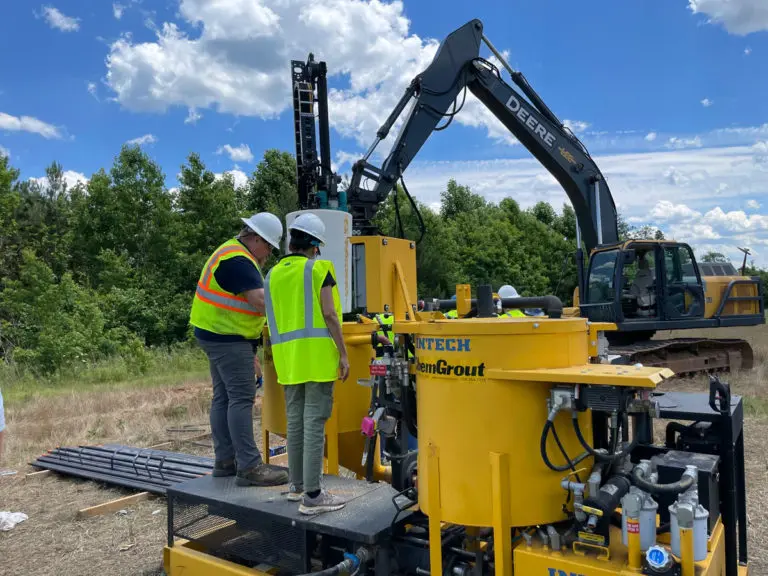
One of the clearest practical differences between the two methods is equipment. A solid bar installation needs a drill rig, drill bits, the steel bar, and steel casing. Four separate components to mobilize, stage, and coordinate. A hollow bar installation needs only two: a rock drill, a compact rotary-percussion unit, and a grout plant, a high-shear colloidal mixer paired with a high-pressure pump that pushes grout through the drill and into the hollow bar as it advances.
Intech Anchoring Systems supplies both rock drills and grout plants for rent or purchase, so contractors moving from solid bar to hollow bar methods, or adding hollow bar capacity to an existing fleet, can source the equipment from the same distributor as the anchoring products themselves.
FAQs About Hollow Bar and Solid Bar Micropiles
What is a self-drilling anchor (SDA)?
A self-drilling anchor is another name for a hollow bar micropile. The hollow steel bar drills into the ground and serves as a conduit for grout at the same time, so drilling and grouting happen in one continuous operation rather than as separate steps.
Can hollow bar micropiles be used in rock?
Yes. Hollow bar systems use interchangeable sacrificial drill bits selected for the specific ground conditions, including hard rock, soft rock, sand, and clay, so the same bar system can adapt across a variable subsurface profile on a single job.
Which method requires less equipment on site?
Hollow bar micropiling. A solid bar installation needs a drill rig, drill bits, the steel bar, and steel casing. A hollow bar installation needs only a rock drill and a grout plant, which simplifies mobilization and reduces the equipment footprint, particularly useful on limited-access sites.
When does a solid bar micropile make more sense than hollow bar?
Solid bar micropiles remain a solid choice on projects with shallow, stable rock foundations where the borehole will hold open reliably through a separate grouting step, and where the added equipment and installation steps don’t create a scheduling or access problem.
Do hollow bar micropiles still need casing?
Not for most installations. Grout fills the hole continuously during drilling, so casing isn’t required to hold the hole open. Casing is added only when a project specifically needs extra bearing capacity for lateral loads.
Speak With Intech’s Engineering Team Today
Soil conditions, access constraints, and load requirements all factor into which micropile system is the right call for a given project. Intech Anchoring Systems supplies both solid bar components and Magnacore hollow bar self-drilling anchors, backed by a licensed engineering team, product and installation training, and the rock drills and grout plants needed to install either system.
Call Intech Anchoring Systems at (888) 458-8904 to discuss your soil conditions and get a recommendation for your project.