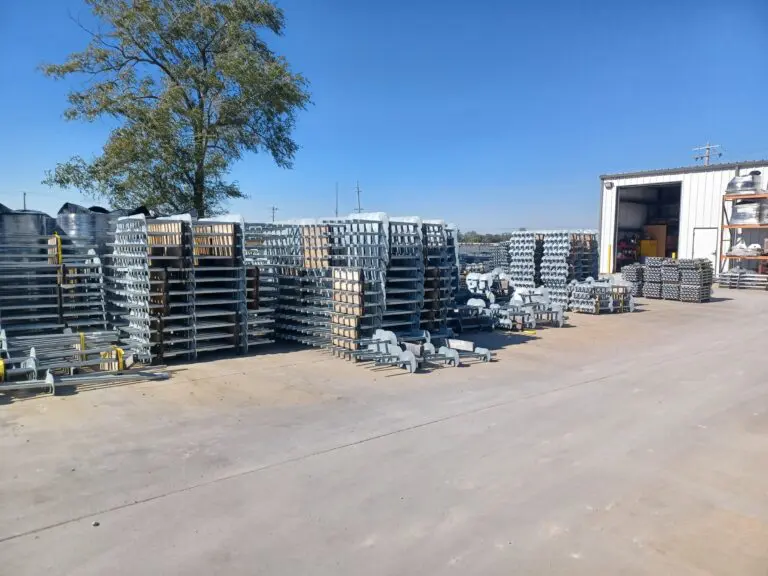


When a foundation settles, cracks, or shifts, the structure above is only as stable as the soil supporting it. Intech Anchoring Systems supplies Atlas Resistance push pier systems to foundation repair contractors nationwide, delivering the steel piers, brackets, and installation equipment needed to stabilize settled foundations and restore structural integrity to homes, commercial buildings, and historic structures.
From residential underpinning projects to multi-story commercial stabilization work, Atlas Resistance push piers deliver verified load capacity and long-term foundation support across virtually every soil condition contractors encounter.
Call Intech Anchoring Systems at (888) 458-8904 to discuss Atlas Resistance push pier systems for your next foundation repair project.
What Atlas Resistance Push Piers Are and How They Work
Resistance piers, also known as push piers or jacked piers, are structural elements used to stabilize and support foundations that have experienced settlement or movement. They are designed specifically to address vertical foundation settlement issues across residential, commercial, industrial, and historic structures.
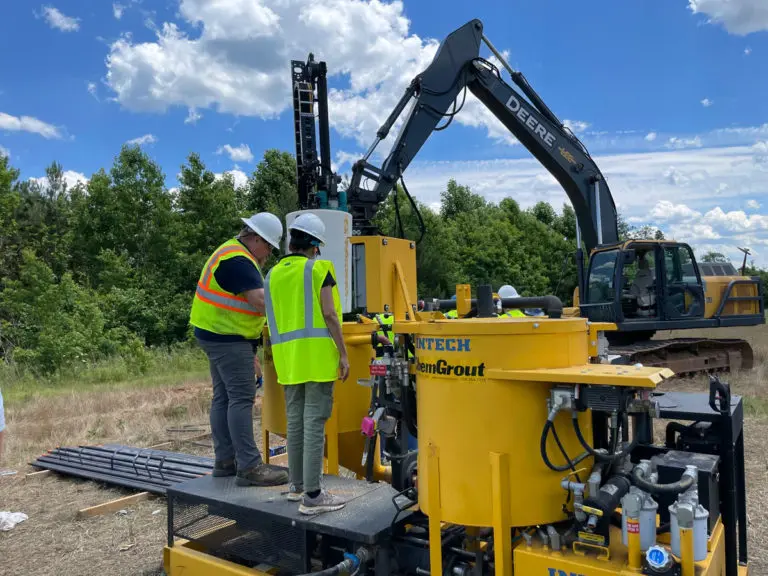
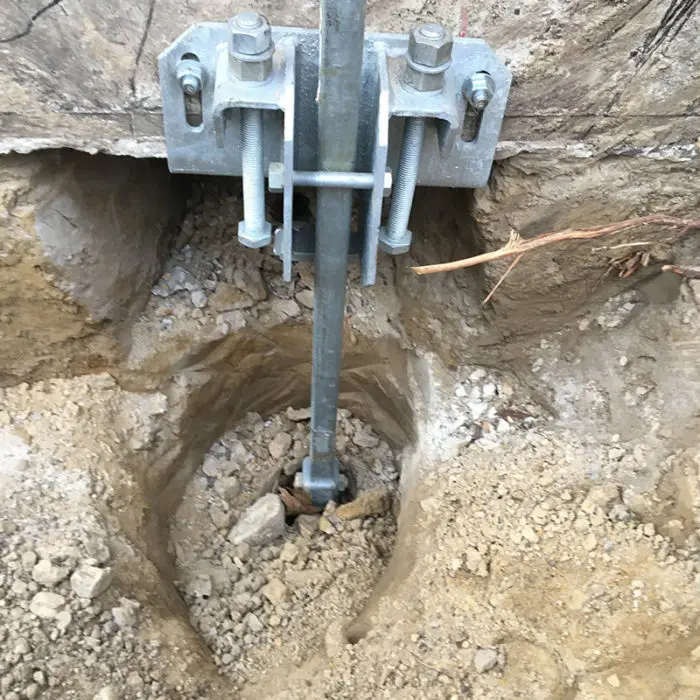
The system consists of steel pipes that are hydraulically driven into the ground beneath the foundation until they reach a stable load-bearing stratum. Installation crews use hydraulic equipment to push the piers into the soil, driving them deep enough to bypass unstable or weak soil layers and reach competent soil or bedrock below. The pier itself uses the weight of the existing structure as the reaction force during installation, which means every pier is effectively load-tested as it goes in.
Common Causes of Foundation Settlement
Foundation settlement happens for several reasons, and understanding the cause helps determine the right stabilization approach. Push piers address settlement caused by:
- Expansive clay soil: Soils that swell when wet and shrink when dry create cyclic movement under foundations, eventually leading to cracking and settlement
- Poor soil compaction: Fill material or native soils that weren’t adequately compacted before construction settle over time as the soil consolidates under building loads
- Moisture-related issues: Excess moisture from drainage problems, plumbing leaks, or rising groundwater can weaken supporting soils and trigger settlement
- Soil erosion: Water erosion beneath foundations removes supporting material and creates voids that lead to settlement
- Building load changes: Additions, modifications, or load redistributions can overstress soils that supported the original structure
Push piers address all of these root causes by transferring building loads through the unstable surface soils down to competent bearing strata, no matter the original cause of settlement.
Atlas Resistance Pier Applications
Resistance piers handle a wide range of foundation stabilization scenarios across multiple property types and project scales.
Residential Buildings
Resistance piers are commonly used in residential properties, including single-family homes, townhouses, and condominiums, to stabilize foundations that have experienced settlement. They address issues caused by factors like soil movement, poor compaction, or expansive clay, restoring structural stability without requiring the home to be vacated during the work.
Commercial and Industrial Structures
Push piers are also used in commercial and industrial buildings, such as offices, warehouses, and factories, to stabilize foundations affected by settlement. These structures often have larger footprints and higher loads than residential properties, making the load-verifying nature of resistance pier installation particularly valuable for commercial applications.
Historical Buildings
Historical structures often require specialized foundation stabilization methods to preserve their architectural integrity. Resistance piers can be employed in historical buildings to address settlement issues without causing significant disturbance or damage to the structure, which makes them well-suited to projects where preservation of original materials matters.
Multi-Story Buildings
Push piers can be used in multi-story buildings to stabilize foundations that have settled unevenly. The piers can be installed at various locations along the foundation to deliver targeted support and prevent further differential settlement across the structure.
Commercial and Infrastructure Projects
Resistance piers are also used in large-scale commercial construction projects, such as shopping centers, hospitals, and schools, as well as infrastructure projects like bridges and highway approaches. They help ensure stable foundations for these structures, protecting them from settlement-related damage across their full service life.
Benefits of Atlas Resistance Push Pier Systems
Push pier systems carry several practical advantages over alternative foundation stabilization methods, particularly for foundation repair contractors working on existing structures.
- Reliable foundation stabilization: Push piers deliver a proven method for stabilizing foundations that have experienced settlement, addressing the underlying load transfer problem rather than just the symptoms
- Verified load capacity during installation: Each pier is effectively load-tested as it advances, giving installers real-time confirmation that the pier has reached competent bearing soil
- Versatility: Push piers work across virtually every structure type, from single-family homes to historic buildings to commercial properties, accommodating different foundation types and loading requirements
- Minimal disruption: The installation process is non-intrusive, requiring limited excavation and no major construction work, which makes it well-suited to occupied buildings and sensitive environments
- Cost-effective long-term repair: By addressing the root cause of settlement, push piers help prevent the cycle of recurring repairs that come with cosmetic fixes alone
- Permanent stabilization: Once installed, push piers deliver a lasting stabilization solution engineered to perform across decades of building service
Frequently Asked Questions About Atlas Resistance Push Piers
How deep do Atlas Resistance push piers typically go?
Depth depends on the soil profile at the site. Push piers advance until they reach competent bearing soil or bedrock, which might be 10 feet down on some sites and 40+ feet down on others.
Can Atlas Resistance piers be installed in occupied homes?
Yes. One of the primary advantages of push pier systems is their minimal disruption profile. Installation requires excavating small access pits at pier locations along the foundation perimeter, with no need to vacate the home or perform demolition work inside the structure.
How is load capacity verified on push pier installations?
Push piers are effectively load-tested as they install. The hydraulic pressure required to advance each pier correlates to the load capacity at that point, and the installer continues driving until the design capacity is reached against competent bearing soil.
Will push piers lift a settled foundation back to level?
In many cases, yes. Once the piers are installed and connected to the foundation through brackets, hydraulic jacks can lift the foundation toward its original elevation.
What kinds of foundations work with Atlas Resistance push piers?
Push pier systems work on concrete slab foundations, basement walls, crawl space foundations, and most commercial foundation types.
Why Contractors Choose Intech Anchoring Systems for Atlas Resistance
Intech Anchoring Systems has been a trusted source of geotechnical and foundation repair solutions since 1998, with deep expertise across underpinning systems, structural stabilization, and the engineering decisions that determine project success. Our team supplies Atlas Resistance push pier systems alongside the brackets, equipment, and technical support contractors need to deliver lasting foundation repairs on every project. That combined product and engineering capability is what sets us apart in the foundation repair supply market.
Beyond product quality, Intech offers extensive inventory that reduces lead times, equipment rental and purchase flexibility for specialized installations, value-added training and engineering support, and the kind of straightforward pricing that helps contractors deliver accurate project bids. From single-project orders to long-term supplier partnerships, our team brings the depth of experience and product reliability your foundation repair work requires.
Talk to Us About Your Atlas Resistance Push Pier Project
Foundation settlement doesn’t fix itself, and the longer it goes unaddressed, the more damage spreads through the structure above. The right underpinning system, properly installed, stops the movement and delivers decades of stable foundation performance. Intech Anchoring Systems supplies Atlas Resistance push pier systems engineered to handle the toughest settlement repair challenges, backed by the engineering support contractors need to specify each project correctly.
Call Intech Anchoring Systems at (888) 458-8904 today to discuss Atlas Resistance push pier systems for your next foundation repair project.