
Resistance Piers (Push Piers) for Foundation Underpinning
When a settled foundation needs to transfer structural load through weak upper soils to competent bearing material below, the underpinning system has to develop capacity without relying on the same soils that allowed settlement in the first place. Intech Anchoring Systems supplies resistance piers, also called push piers or jacked piers, for contractors stabilizing residential, commercial, and light industrial structures affected by vertical settlement.
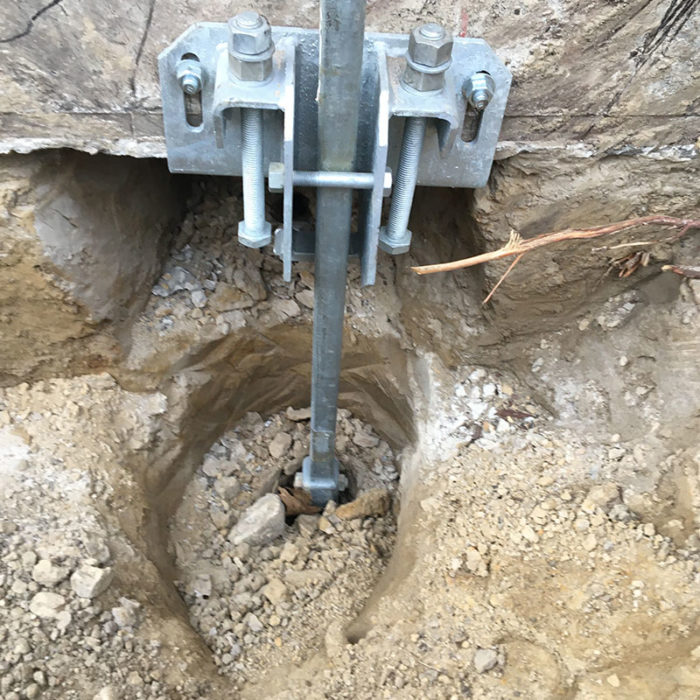
Resistance piers use the weight of the existing structure as the reaction force during installation. Steel pier sections are hydraulically advanced beneath the footing until they reach the required bearing condition, then connected to the structure through engineered brackets so the foundation load can be transferred onto the installed pier system.
Call Intech Anchoring Systems at (888) 458-8904 to discuss resistance pier sizing, brackets, installation equipment, and engineering support for your underpinning project.
How Resistance Piers Transfer Foundation Loads
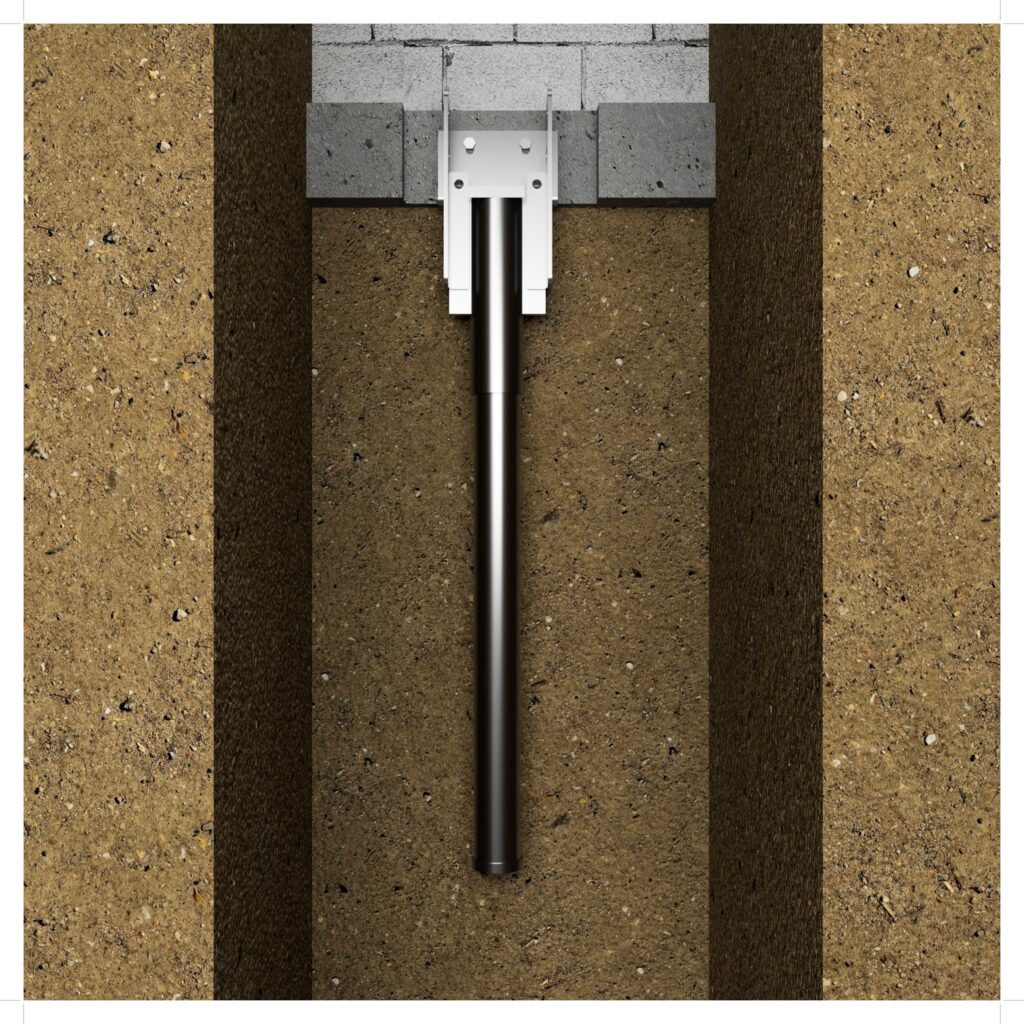
A resistance pier bypasses weak near-surface soils by driving connected steel pipe sections below the footing until the system reaches competent bearing material, bedrock, or the required installation resistance for the project. The existing structure provides the reaction force needed to advance the pier hydraulically.
Once installation criteria are reached, the pier is locked into the foundation bracket and becomes part of the new load path. Structural weight that was previously carried by unstable soil can then be transferred deeper through the pier system, and the installed pier can be loaded immediately.
When Push Piers Fit an Underpinning Project
Resistance piers are most useful when the structure is heavy enough to provide the reaction force needed for installation and when suitable bearing conditions can be reached below the problem soils. They are commonly used for foundation settlement, poorly compacted fill, expansive or moisture-sensitive soils, erosion-related settlement, recurring structural cracking, uneven floor elevations, commercial underpinning, and historic structure stabilization.
The structure, footing geometry, settlement pattern, available access, and subsurface conditions should drive system selection. A push pier should be chosen because its load-transfer method fits the project, not simply because it has worked on another site.
Atlas Resistance Push Pier Systems
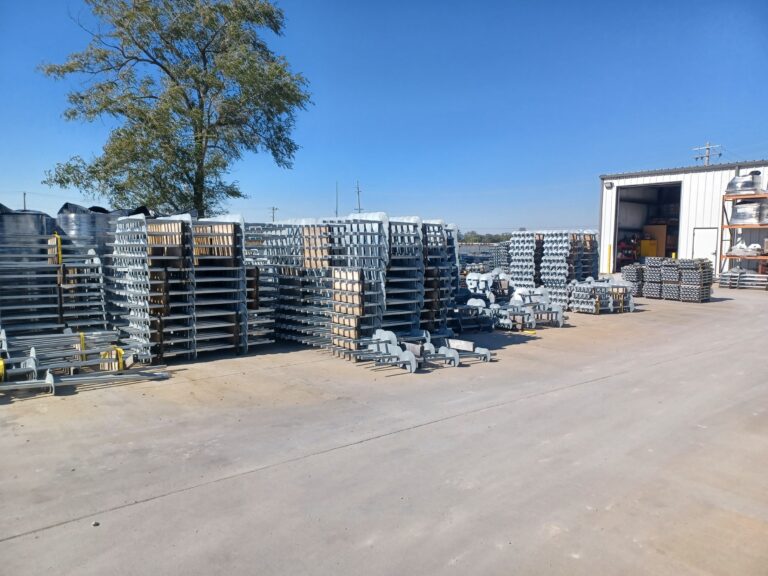
Intech supplies Atlas Resistance push pier systems for underpinning applications that require hydraulically installed steel piers, foundation brackets, and controlled load transfer. The system uses steel pier sections advanced below the structure and a bracket assembly that connects the installed pier to the existing footing.
Partner With Us
Book Equipment
Resistance Pier Installation Process
A successful resistance pier installation depends on maintaining alignment, reaching the required bearing condition, establishing a dependable bracket connection, and transferring load in a controlled sequence. A typical installation can include the steps below, though the final sequence should follow the project design rather than treating every foundation as an identical pier layout:
- Foundation exposure: Excavate at the proposed pier location to expose the footing and create access for the bracket.
- Footing preparation: Prepare the foundation surface for proper bracket bearing.
- Bracket installation: Position and secure the resistance pier bracket according to the repair design.
- Pier advancement: Hydraulically push steel pier sections into the ground using the structure as reaction.
- Installation monitoring: Track hydraulic pressure and advancement as the pier approaches the required bearing condition.
- Pier lock-off: Secure the pier once installation criteria are achieved.
- Load transfer: Shift structural load from the footing onto the installed pier system.
- Controlled lift: Apply lift where elevation recovery is included in the project.
- Verification: Monitor pier loads and structural response before completing the work.
- Backfill & restoration: Protect installed components and restore the excavation after acceptance.
Installation Resistance Provides Jobsite Feedback
One of the main advantages of a resistance pier is that crews can monitor hydraulic resistance while the pier is being advanced. As stronger bearing material is reached, the force required to continue driving the pier increases.
That information helps contractors verify the behavior of each pier location individually. Depth still matters, but the real objective is reaching the bearing condition needed to support the design load.
Resistance Piers vs. Helical Piers
Resistance piers and helical piers can both underpin settled foundations, but they develop capacity differently. Helical piers are rotated into the soil using helical bearing plates, with installation torque serving as an important indicator of capacity. Resistance piers are hydraulically pushed into the ground using the existing structure as reaction.
Resistance piers can be a strong fit when the structure provides enough reaction load, deep competent bearing or bedrock can be reached, low vibration is important, spoil generation needs to remain limited, and controlled lift may be part of the repair. Helical systems may make more sense when structure weight, soil profile, access, or capacity requirements favor torque-driven installation.
Limited Excavation and No Drilling Spoils
Resistance piers do not require augering a large bore or removing soil along the full pier depth. Crews excavate locally at each footing location, install the bracket, and hydraulically push the pier sections below the structure.
That reduces drilling spoil and can simplify work around occupied buildings, finished properties, tight side yards, interior spaces, and other areas where managing excavated material would add time and coordination.
Hydraulic Equipment for Resistance Pier Installation
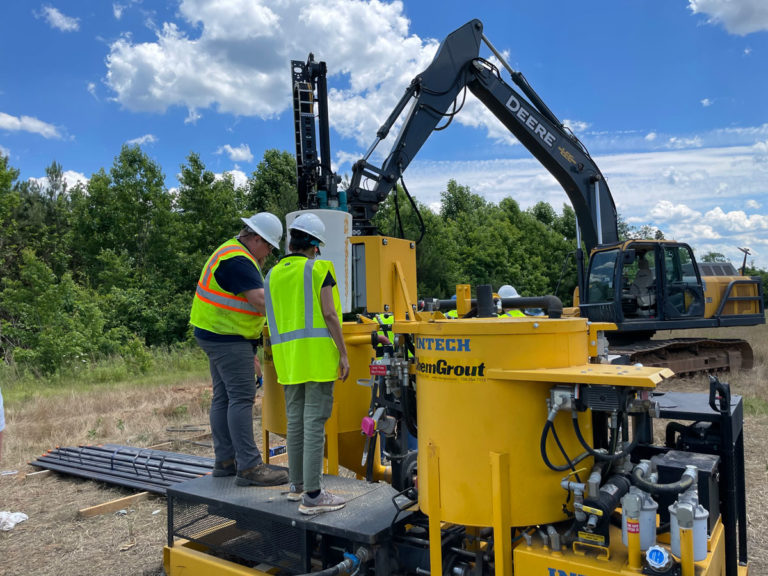
Intech supplies resistance pier installation equipment for contractors performing push pier underpinning. Complete hydraulic kits are available for rental or purchase so crews can add resistance pier work without sourcing individual installation components from multiple vendors.
Available systems include tooling for 2.875-inch and 3.5-inch resistance material, with hydraulic kits rated to 10,000 psi. Kits can include the cylinder, pump, lift heads, guide tooling, and related hydraulic components needed to drive and lock the pier system.
Stabilization and Foundation Lift Are Different Objectives
Installing resistance piers does not automatically mean a structure should be returned to its original elevation. Stabilization transfers structural load onto the new pier system to reduce additional settlement, while controlled lift applies hydraulic force across installed piers to recover some lost elevation.
How much lift is appropriate depends on structural condition, construction type, settlement history, existing finishes, utility connections, and the response of the building during the lift. Some projects can tolerate meaningful recovery, while others should be stabilized close to their existing position.
Partner With Us
Book Equipment
Resistance Pier FAQs
How does a resistance pier know when it has reached suitable bearing?
Hydraulic pressure and pier advancement are monitored during installation. As the pier reaches stronger material, the force required to continue pushing it increases, and project-specific criteria determine when advancement can stop.
Do push piers have to reach bedrock?
Not always. They need to reach a bearing condition capable of supporting the required load. On some projects that means bedrock, while on others competent soil provides enough resistance.
Can resistance piers lift a settled foundation?
Yes, controlled lift can be performed after installation when the structure, project design, and repair objectives allow it. Some projects are intentionally limited to stabilization.
Can resistance piers be installed in limited-access areas?
Yes. Portable hydraulic equipment and segmented pier material can make push pier installation practical in many locations where larger foundation equipment would be difficult to mobilize, provided crews can access the footing.
How many resistance piers does a foundation need?
Load concentrations, footing condition, settlement pattern, and soil conditions all affect the layout, so the count and spacing come from the engineered repair design rather than a standard number per structure.
Can resistance piers help with foundation cracks and uneven floors?
Cracking and uneven floors are often symptoms of foundation settlement. Resistance piers address the settlement by transferring load to deeper bearing material, and controlled lift can recover some elevation where the structure allows it. Existing cracks and finishes may still need separate repair afterward.
How long does resistance pier installation take?
Timing depends on the number of piers, depth to bearing material, excavation access, soil conditions, and whether controlled lift is part of the project. Portable hydraulic equipment lets crews work pier location by pier location rather than mobilizing large drilling equipment.
Engineering, Components, and Equipment From One Source
Foundation underpinning depends on more than the steel pushed into the ground. Bracket selection, pier alignment, structural loads, installation pressure, bearing conditions, and lift sequencing all affect how the finished system performs.
Since 1998, Intech Anchoring Systems has supported foundation repair contractors. Today that includes Atlas Resistance push pier components, brackets, technical guidance, engineering input, installation training, and hydraulic equipment available for rent or purchase. That gives foundation repair teams one source for both the underpinning system and the equipment required to install it.
Build the Underpinning Plan Around the Load Path
Resistance piers work best when the project needs to bypass weak soils and transfer foundation loads to stronger bearing material below. The structure itself becomes part of the installation process, so reaction load, footing condition, settlement pattern, and subsurface behavior all matter before the first pier is driven.
Intech Anchoring Systems helps contractors evaluate those conditions and select the push pier components, brackets, equipment, and installation approach that fit the project.
Call Intech Anchoring Systems at (888) 458-8904 to review your resistance pier underpinning project with our team.