
Bowing Wall Stabilization: Helical Anchors, Carbon Fiber & Plate Systems
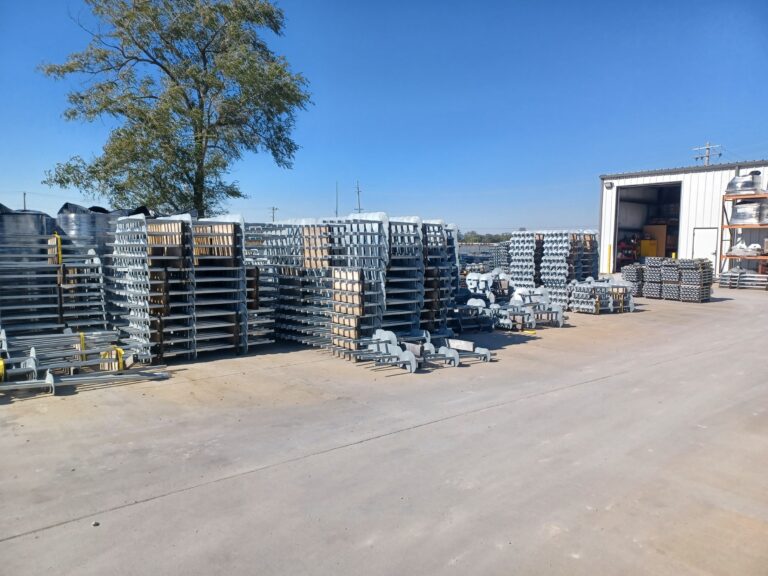
A bowed or leaning foundation wall is a lateral-load problem, and the repair method has to match the amount of movement, wall construction, exterior access, and forces acting behind the wall. Intech Anchoring Systems supplies bowing wall stabilization products for foundation repair contractors, including helical and deadman wall anchors, Carbonbond carbon fiber wall bracing, and steel wall-brace systems for projects that require a different approach to resisting continued inward movement.
No single stabilization method fits every foundation. The right system depends on what the wall is made from, how far it has moved, where the pressure is coming from, what access exists around the structure, and what the engineered repair needs to accomplish.
Call Intech Anchoring Systems at (888) 458-8904 to discuss the wall condition, access constraints, and stabilization system for your next foundation repair project.

Start With the Wall Condition, Not the Product
Bowing walls develop when lateral forces exceed what the foundation wall can resist. The most common driver is hydrostatic pressure from water-soaked, expanding soil, often made worse by poor drainage, malfunctioning gutters, broken pipes, heavy rainfall, tree roots, or uneven weight distribution. Changing soil conditions and structural loading can also contribute to inward movement.
The visible result may be a horizontal crack, stair-step cracking through masonry joints, a wall that has begun leaning inward from the top, or measurable bowing through the center of the wall. Those symptoms describe the movement, but they do not automatically determine the repair. Contractors still need to evaluate the conditions below, and that assessment should lead to the repair system, not the other way around:
- Wall construction: Poured concrete and concrete block walls respond differently to loading and reinforcement.
- Degree of movement: A wall with limited displacement may call for a different stabilization strategy than one that has moved farther inward.
- Exterior access: Property lines, patios, decks, utilities, landscaping, and neighboring structures can affect anchor installation.
- Interior clearance: Finished basements and mechanical systems can influence the practicality of interior brace systems.
- Soil conditions: The anchor system has to reach soil capable of developing the required resistance.
- Repair objective: Some projects are intended to stabilize existing movement, while others may include correction where the condition and engineering allow it.
Helical Wall Anchors (Helical Tiebacks) for Lateral Foundation Support
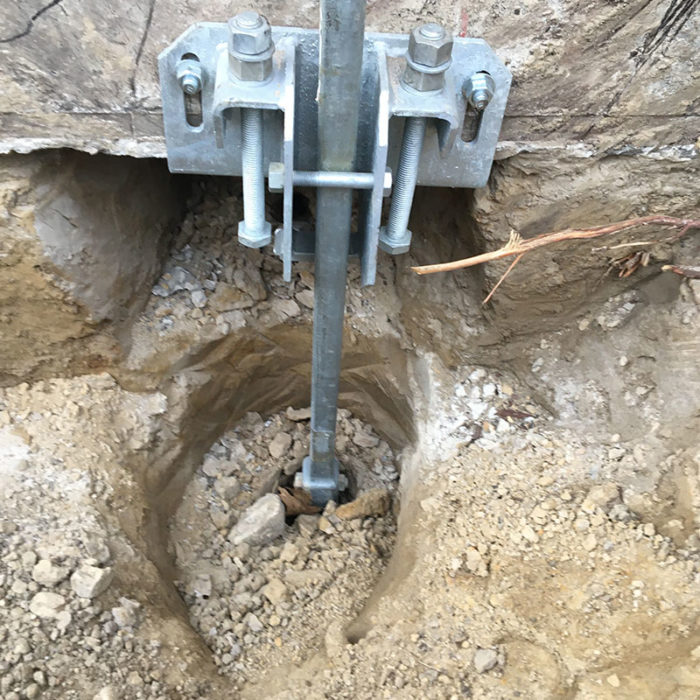
Helical wall anchors, also called helical tiebacks, transfer lateral forces from the compromised foundation wall into stable soil beyond the active pressure zone. Steel helicals are advanced through the wall and into the surrounding soil, then connected to an interior wall plate that applies resistance against continued inward movement.
This approach can be useful when the project has suitable exterior access and the repair requires resistance developed away from the wall itself. It gives contractors an engineered system that can be installed with relatively limited disturbance compared with removing and rebuilding the affected foundation wall. Intech also supplies deadman wall anchor systems, which likewise use the surrounding soil and an interior connection to stabilize the wall, with system selection driven by project conditions and engineering requirements.
Carbonbond Carbon Fiber for Low-Profile Wall Reinforcement
Carbonbond carbon fiber wall bracing reinforces the interior face of the foundation without introducing bulky steel components into the basement. Unidirectional carbon fiber straps are bonded directly to the wall using structural epoxy, creating a thin reinforcement system designed to resist continued inward movement. The low profile is one of the system’s most practical advantages, since carbon fiber takes up very little interior space and can be incorporated into basements where preserving usable wall area matters.
Carbonbond wall bracing uses high-strength composite material with published engineering properties, including dry fiber tensile strength greater than 720 ksi and certified laminate tensile strength of 200 ksi. The installed laminate is approximately 0.02 inch thick, allowing substantial tensile reinforcement without a large interior footprint. Carbon fiber is not simply a cosmetic crack covering: the strap, adhesive, wall preparation, and connection details work together as a structural reinforcement system, so product selection and installation need to follow the requirements of the repair design.
Steel Wall Brace Systems When Exterior Anchoring Is Not the Best Fit
Some sites do not offer practical exterior access for wall anchors. In those cases, an interior wall brace may provide another path for resisting inward movement. The Force Arrester Wall Brace System uses structural steel reinforcement along the interior side of the foundation wall to counter the lateral forces responsible for cracking, bowing, shearing, and shifting. The system can stabilize both load-bearing and non-load-bearing foundation walls.
Interior bracing keeps the stabilization work primarily inside the structure, which can be useful when excavation or exterior anchor placement is restricted by neighboring structures, pavement, additions, decks, property boundaries, or site configuration. The tradeoff is interior footprint. Steel bracing occupies more wall space than carbon fiber, so site layout and the intended use of the basement should be considered alongside the structural requirements. Intech also supplies wall brackets for poured concrete foundations and C channels for block walls.
Helical Anchors vs. Carbon Fiber vs. Wall Braces
The most useful comparison is not which product is strongest in isolation. It is which system develops the required resistance under the conditions of the actual project.
Helical wall anchors make sense when the design can develop resistance in stable soil beyond the wall and the project has adequate access for anchor installation. They create a direct load path from the foundation wall into the surrounding soil.
Carbon fiber wall bracing provides thin, bonded reinforcement along the interior wall surface. Its minimal projection can make it attractive for basement spaces where preserving usable interior area is a significant consideration.
Steel wall braces resist lateral movement from the interior and avoid the need to extend an anchor into the exterior soil. They can be particularly useful when exterior access is one of the project’s primary constraints.
Contractors do not need to force every bowing wall into one repair method. Intech’s engineering team can help evaluate wall construction, displacement, load requirements, and site access before equipment and material are committed to the job.
Crack Repair Can Be Part of the Stabilization Scope
Foundation movement frequently appears alongside cracks in poured concrete or masonry, and crack treatment and structural stabilization solve related but different problems. Epoxy and polyurethane systems can be used to address appropriate concrete cracks, while carbon fiber can add reinforcement when the repair design calls for it.
Intech supplies structural stabilization and crack repair products so contractors can assemble the repair scope around the condition of the wall rather than treating every crack as a standalone problem. If movement is still occurring, simply sealing the visible crack does not address the lateral force responsible for the displacement, so stabilization should be addressed as part of the structural repair strategy.
Why Wall Replacement Is Not the Only Path
Removing and rebuilding a foundation wall can involve excavation, demolition, structural support, material replacement, site restoration, and significant disruption inside and outside the structure. Occupants may also need to move out during the work, and replacement may not stop the problem from returning if the underlying pressure that moved the wall in the first place is not addressed.
Engineered stabilization can give contractors another option when the existing wall is a candidate for repair. Helical anchoring, carbon fiber reinforcement, and interior brace systems approach the problem differently, allowing the repair plan to match the structural condition and site constraints instead of automatically defaulting to full replacement. Stabilization methods are typically quicker and more affordable, and they target the lateral force behind the movement by establishing a load path capable of resisting continued movement.
Common Bowing Wall Stabilization Applications
Intech’s stabilization systems support residential and light commercial foundation repair contractors working across a range of wall conditions.
Common applications include:
- Bowed basement walls: Stabilize walls that have displaced inward under lateral soil pressure.
- Leaning foundation walls: Resist continued movement where the wall has shifted from its original vertical position.
- Cracked concrete block walls: Reinforce masonry foundations showing stair-step, horizontal, or movement-related cracking.
- Cracked poured concrete walls: Address structural movement in poured foundation walls with the repair system appropriate to the condition.
- Shifting foundation walls: Add resistance when continued lateral soil pressure is moving the wall inward.
- Limited-access sites: Select interior systems when exterior excavation or anchor placement is restricted.
- Finished or finish-ready basements: Use low-profile reinforcement where maintaining interior wall space is an important project consideration.
- Retaining and structural wall applications: Apply engineered anchoring where walls require additional lateral resistance.
- Older home foundations: Reinforce aging foundation walls that have moved under years of soil pressure.
Frequently Asked Questions About Bowing Wall Stabilization
What causes foundation walls to bow?
The primary cause is hydrostatic pressure from wet, expanding soil pressing against the foundation, often made worse by poor drainage.
Are stair step cracks always a sign of a bowing wall?
Not always, but stair-step cracks in block walls are a common warning sign of lateral movement and warrant professional inspection before a repair method is chosen.
How does the cost of bowing wall stabilization compare to wall replacement?
Stabilization with helical anchors or carbon fiber is typically far less expensive than full wall replacement, and it targets the lateral force behind the movement.
Can bowing walls be repaired without occupants moving out?
Yes, stabilization methods like helical tiebacks and carbon fiber repairs are minimally invasive and typically allow occupants to remain in the building during the work.
How long does a typical bowing wall repair take?
Most stabilization projects can be completed in one to three days depending on the size of the wall and the repair method used.
When should a contractor use helical wall anchors instead of carbon fiber?
The decision depends on wall movement, wall construction, required resistance, exterior access, and the engineering plan. Helical anchors transfer force into stable soil beyond the foundation, while carbon fiber reinforces the wall from the interior surface.
Do helical wall anchors require exterior excavation?
Installation requires access outside the wall so the anchor can be advanced into suitable soil. The amount of site disturbance depends on the system configuration and project conditions, but the process does not require removing and rebuilding the entire wall.
Can carbon fiber be installed in a finished basement?
Its thin profile makes carbon fiber particularly useful where preserving interior space matters. Wall preparation and access to the required connection points still have to be incorporated into the installation plan.
Engineering Support for Selecting the Wall Stabilization System
Product selection becomes much easier when the wall condition and site constraints are defined first. Since 1998, Intech Anchoring Systems has supported foundation repair contractors with engineering guidance, technical literature, installation information, and multiple stabilization systems rather than pushing every project toward one product.
Our lineup includes helical and deadman wall anchors, Carbonbond carbon fiber reinforcement, Force Arrester wall bracing, and related structural repair products. That range gives contractors options when soil access, wall material, displacement, interior space, or project design eliminates one repair path in favor of another, and straightforward pricing and technical support help them build the installation scope around known material and system requirements before mobilizing to the site.
Match the Stabilization Method to the Load Path
A bowing wall repair succeeds when the selected system resists the forces that are actually moving the foundation and fits the physical constraints of the job. Intech Anchoring Systems helps contractors compare anchoring, carbon fiber, and interior bracing options based on wall construction, displacement, access, soil conditions, and the structural objective of the repair.
Start with the wall and the load path, then choose the product that fits those conditions.
Call Intech Anchoring Systems at (888) 458-8904 to review your bowing wall project with our team and identify the appropriate stabilization system.