
Slope Shoring Reinforcement: Soil Nails, Anchors & Earth Retention
Slope movement and unsupported excavation faces can quickly turn into safety, access, and schedule problems if lateral soil forces are not controlled early. Intech Anchoring Systems supplies slope shoring reinforcement systems for contractors and engineers working on permanent slopes, temporary excavations, retaining structures, seawalls, bulkheads, and other earth retention applications.
The system has to match both the engineering requirements and the way the work will actually be installed. Soil conditions, groundwater, wall geometry, available right-of-way, equipment access, design life, and required load resistance all influence the choice between soil nails, helical anchors, tiebacks, soil screws, or another earth retention method.
Dealing with a slope cut, excavation face, or retaining wall? Call (888) 458-8904 and we will help line up nails, anchors, and equipment.
Reliable Reinforcement for Slopes, Excavations & Retaining Structures
Slope stabilization and earth shoring are both intended to control soil movement, but the installation strategy can differ significantly. A permanent slope may need reinforcement distributed through the soil mass, while an excavation support system may require anchors transferring lateral loads behind a wall or temporary facing.
Intech supports both permanent and temporary systems with products for tieback reinforcement, soil nailing, slope stabilization, seawalls, bulkheads, and earth retention. The objective is to help project teams select a system that develops the required load resistance without creating unnecessary excavation, vibration, or equipment demands. Hillsides and embankments exposed to erosion can lose support over time, so slope reinforcement is often paired with facing and drainage details that protect the surface.
Benefits of Engineered Slope Stability & Earth Shoring
Modern reinforcement systems can reduce the amount of excavation and heavy equipment required to stabilize a slope or support an excavation. Helical anchors can provide immediate load resistance after installation, while hollow bar soil nails can combine drilling, reinforcement, and grouting within one installation sequence.
That flexibility can help contractors work more efficiently in restricted-access areas, around nearby structures, or on projects where construction sequencing is tight. Properly selected systems also provide a more direct load path into stable ground, helping control movement while supporting the required temporary or permanent design condition.
How We Support Slope Stability & Shoring Projects
Successful slope shoring starts with the project requirements rather than a standard anchor choice. Intech works with contractors and project teams to review the application, known soil conditions, design loads, wall or slope configuration, access limitations, and installation method before materials and equipment are coordinated.
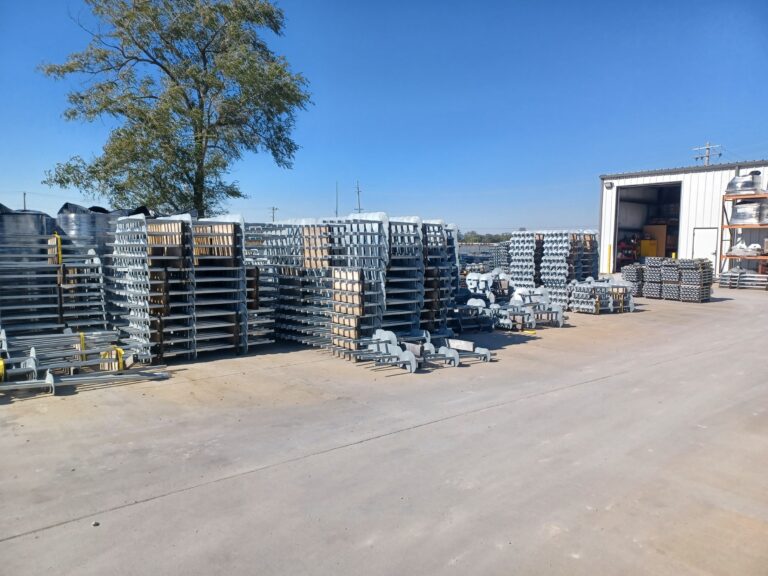
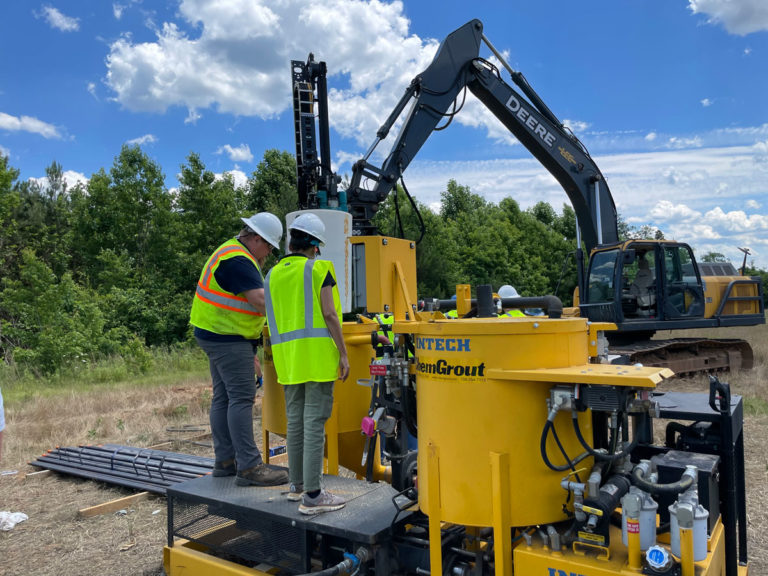
From there, we can help match the anchoring system with the required bars, couplings, plates, extensions, tooling, drilling or hydraulic equipment, and testing needs. Equipment is available for rental or purchase, helping contractors build the installation package around the actual job instead of sourcing each component separately.
Slope Stability & Earth Shoring Applications
Earth retention systems are used across excavation support, long-term slope reinforcement, shoreline structures, and retaining-wall construction. The appropriate system depends on how the retained soil is expected to behave and how the reinforcement will interact with the facing or structural element.
Permanent Shoring
Permanent shoring systems are designed to remain part of the finished structure and resist lateral soil loads over the long term. Applications can include retaining walls, hillside cuts, transportation projects, infrastructure, and other locations where movement has to remain controlled after construction is complete.
Helical tiebacks, hollow bar anchors, and soil nail systems can be used to reinforce qualifying permanent shoring systems, depending on soil conditions, wall geometry, design loads, corrosion requirements, and access. Permanent work also requires closer attention to service life and long-term durability than temporary excavation support.
Seawalls and Bulkheads
Seawalls and bulkheads are exposed to changing water levels, erosion, lateral soil pressure, and repeated environmental loading. Tieback systems can connect the wall to stable ground behind the retained zone, helping resist rotation, movement, or loss of support.
Intech supplies anchoring products used in qualifying shoreline reinforcement and earth retention applications. Product selection should account for structural loads, soil conditions, corrosion exposure, right-of-way, and the connection between the anchor and the wall system.
Temporary Shoring
Temporary shoring keeps excavations and exposed soil faces stable while construction progresses. It may be required around foundation work, utilities, below-grade structures, or other projects where unsupported soil could affect workers, adjacent structures, or site access.
Tiebacks and soil nails can be incorporated into temporary wall systems where the construction sequence allows reinforcement to be installed as excavation advances. The selected method should account for excavation depth, soil behavior, groundwater, available space behind the wall, and how quickly the system needs to take load.
Soil Nails for Reinforcing the Ground Mass
Soil nails reinforce the soil itself rather than relying only on a freestanding retaining structure. They are typically installed into an exposed slope or excavation face and then integrated with a facing system so the reinforced soil mass works together.
Hollow bar soil nails can be especially useful in variable or difficult ground because the bar can serve as both drilling element and reinforcement while grout is introduced during installation. That can simplify installation where an open borehole would otherwise be difficult to maintain.
Tiebacks & Earth Anchors for Lateral Load Resistance
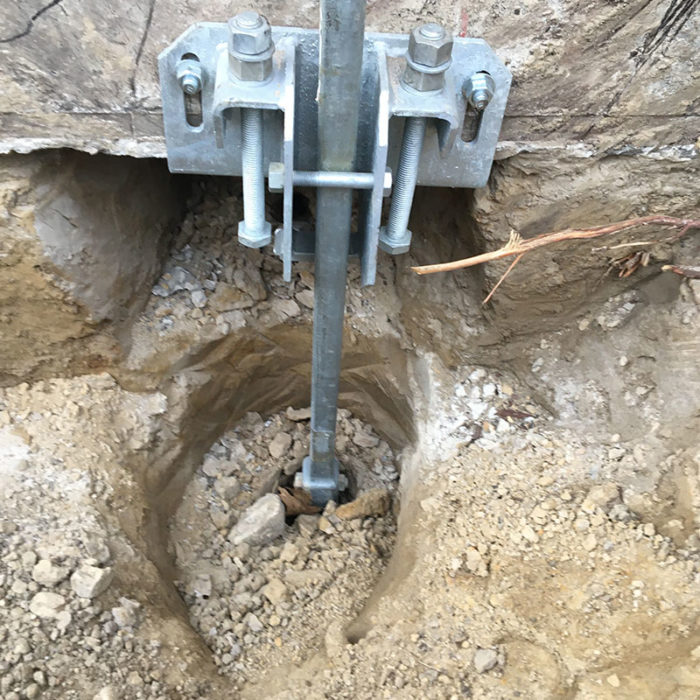
Tiebacks transfer lateral loads from a wall or shoring system into stable ground behind the retained zone. Depending on the project, that may involve helical tiebacks or hollow bar tieback anchors.
Helical tiebacks can provide immediate resistance after installation and avoid grout-curing delays in qualifying soils. Hollow bar anchors are often the better choice where the ground calls for drilling and grouting instead of mechanical installation. Load requirements, soil conditions, access, testing, and installation constraints should determine the system.
Soil Screws for Slope Stabilization
Soil screws are rotated into the slope face, which makes them a mechanical alternative to drilled nails on qualifying slopes. Like other systems in this category, their usefulness depends on the way the reinforcement interacts with the soil and the load path required by the design.
They can be considered where installation speed, access, or site disturbance makes a mechanically installed solution attractive. Final selection should still follow the geotechnical and structural requirements of the project.
FAQs About Slope Stability & Earth Shoring
What is the difference between slope stabilization and earth shoring?
Slope stabilization generally focuses on reinforcing a natural or constructed slope so the soil mass remains stable over time. Earth shoring is more often associated with supporting an excavation or retained soil face during temporary or permanent construction. The systems can overlap. Soil nails, tiebacks, and other anchors may appear in either application depending on geometry, loads, soil conditions, and the facing system.
When are soil nails a good choice for slope reinforcement?
Soil nails can be effective where reinforcement can be installed progressively into an exposed slope or excavation face and incorporated with a facing system. They are often considered for cuts, slopes, retaining structures, and excavation support where the reinforced soil mass can act as part of the retention system. Ground conditions, nail length, spacing, inclination, grout bond, drainage, and facing requirements all affect suitability.
Why choose helical tiebacks over hollow bar anchors?
Helical tiebacks can be advantageous where immediate loading, reduced spoils, and mechanically verified installation are important. Hollow bar anchors may be a better fit where drilling and grouting through difficult or variable ground is preferred. The right choice depends on soil conditions, required capacity, wall geometry, access, testing requirements, and project sequencing.
Can these systems be used for both temporary and permanent shoring?
Yes, but permanent work carries extra requirements such as corrosion protection, drainage, and a service life that extends well beyond construction. Temporary systems are typically designed around the construction period and excavation sequence, even though many of the same reinforcement methods may be used.
What information is needed before ordering slope stabilization products?
The project team should have as much information as possible about soil conditions, groundwater, design loads, slope or wall geometry, required anchor or nail lengths, facing details, equipment access, testing requirements, and whether the system is temporary or permanent. Those details help determine the appropriate reinforcement product, quantities, equipment, and accessories before the installation crew reaches the site.
Plan the Reinforcement System Before Mobilization
Slope shoring work becomes more difficult when anchors, tooling, equipment, and testing requirements are handled as separate decisions. Intech helps contractors coordinate those pieces early so the installation method, material quantities, and equipment package fit the project from the start.
Early coordination can also improve cost evaluation. Product quantities, equipment needs, testing requirements, and installation constraints can be reviewed together before mobilization, giving contractors a more accurate basis for budgeting and reducing avoidable changes in the field.
Built Around Contractor Support Since 1998
Intech has supplied foundation, anchoring, and earth retention contractors since 1998. We stock a deep range of anchoring products, rent or sell installation equipment, and review quantities, equipment, and site constraints with your team before crews head to the field, so budgets hold up and fewer surprises show up on site.
Get Slope Stability & Earth Shoring Support
Slope stabilization and shoring systems perform best when the reinforcement method matches the soil conditions, load path, construction sequence, and available access. The anchor or soil nail is only one part of that system. Equipment, facing, connections, testing, and installation criteria all have to work together.
Intech Anchoring Systems supplies soil nails, tiebacks, earth anchors, soil screws, installation equipment, and related support for permanent shoring, temporary excavation support, seawalls, bulkheads, slopes, and other earth retention projects.
Have a slope or excavation that needs reinforcement? Call (888) 458-8904 to go over nails, anchors, equipment, and quantities with us.